48 h
Mount Toubkal Summit Trek – 2 Days
- Guia local especializado
- Grupo pequeno
- Acesso sem filas
- Cancelamento gratuito
Climb 4,167 metres through Berber valleys, sleep at refuge altitude
Compare tarifas e escolha a que mais lhe convém — todas as reservas incluem voucher móvel e cancelamento gratuito onde indicado.
48 h
48 h
48 h
| Experiência | De | Duração | Avaliação | Recolha | Guia | Cancelamento | Preço | |
|---|---|---|---|---|---|---|---|---|
|
Com guia
Mais popular
Mount Toubkal Summit Trek – 2 Days
|
— | 48 h | ★ 4.7 | ✓ | ✓ | ✓ | €93 | Reservar → |
|
Com guia
Mt. Toubkal 2-Day Summit Trek with Refuge Stay
|
— | 48 h | ★ 4.7 | ✓ | ✓ | ✓ | €105 | Reservar → |
|
Com guia
Mount Toubkal Summit Trek from Marrakesh
|
Marrakesh | 48 h | ★ 4.6 | — | ✓ | ✓ | €105 | Reservar → |
Worth it for fit hikers seeking Africa's summit
The mount toubkal trek 2 days compresses North Africa's highest peak into a focused alpine push. You start in Imlil at 1,740 meters, hike four to five hours through walnut groves and Berber villages to reach the refuge at 3,200 meters, then summit at dawn the next day. Guided tours are mandatory by law, and most packages include mule support, refuge accommodation, and meals. The trek demands solid fitness—1,500-meter elevation gain on day two—but requires no technical climbing skills. For mountaineers chasing the 4,167-meter summit without a week-long expedition, the two-day format delivers maximum altitude reward with minimal time investment. Casual hikers may find the pace punishing; the value lies in efficiency, not comfort.
Bottom line: Mount toubkal trek 2 days tours trade comfort for summit efficiency—worth every meter if you're fit and time-pressed.
Most trekkers weigh the mount toubkal trek 2 days itinerary against the longer 3-day summit push, and the choice comes down to whether you want the peak or just the High Atlas scenery. The 2-day route is the faster, budget-friendly option; the 3-day climb adds a proper summit attempt and altitude buffer.
|
Top pick Toubkal Trek (2 Days) |
Toubkal Summit Climb (3 Days) | |
|---|---|---|
| Summit attempt (4,167m) | — (reaches refuge/high valleys only on some itineraries) | ✓ Included |
| Trekking days | 2 days, 1 night | 3 days, 2 nights |
| Typical price | From approx. 250-350 USD per person | From approx. 350-450 USD per person |
| Overnight stop | Toubkal Refuge (3,207m) | Toubkal Refuge, two nights |
| Physical intensity | Moderate — steep but no scree summit push | Strenuous — includes early pre-dawn summit ascent |
| Guide requirement | Mandatory licensed mountain guide | Mandatory licensed mountain guide |
| Best for | First-timers, time-limited visitors | Fit hikers wanting the summit |
| Altitude acclimatization | Minimal — one night at altitude | Better — extra night eases altitude adjustment |
| Group mules/porters | Optional add-on | Usually included for gear |
| See tickets & prices |
Verdict: Choose the 2-day trek for a shorter, cheaper taste of the Atlas and the refuge experience, and the 3-day climb if reaching the actual 4,167m summit matters to you.
Experiências selecionadas amadas por milhares de viajantes
2 days
Cancelamento gratuito
Trek through alpine valleys, cross mountain passes, and experience authentic Berber hospitality in a traditional village guesthouse
3 days
Cancelamento gratuito
Conquer North Africa's tallest peak on a guided mountain adventure through Berber villages and alpine terrain
2 days
Cancelamento gratuito
Climb North Africa's tallest mountain on a guided two-day adventure through the High Atlas.
3 days
Cancelamento gratuito
Journey through High Atlas peaks, traditional villages, and mountain passes on this immersive hiking adventure
2 days
Cancelamento gratuito
Conquer North Africa's tallest mountain on this two-day guided expedition through Berber valleys
2 days
Cancelamento gratuito
Scale North Africa's tallest mountain on this overnight trek through the High Atlas range
2 days
Cancelamento gratuito
Conquer North Africa's highest peak on a two-day guided mountain adventure through the Atlas range
2 days
Cancelamento gratuito
Conquer North Africa's highest peak with an expert guide, mountain refuge stay, and traditional meals
Trek departs Imlil around the 07:00–10:00 window, climbing through Sidi Chamharouch shrine to reach the refuge at 3,207 meters before afternoon heat sets in
Pre-dawn start from the refuge for the steep scree ascent to the 4,167-meter summit, followed by descent back to Imlil by afternoon
Guide from the Bureau des Guides confirms gear, weather, and pacing before departure in Imlil
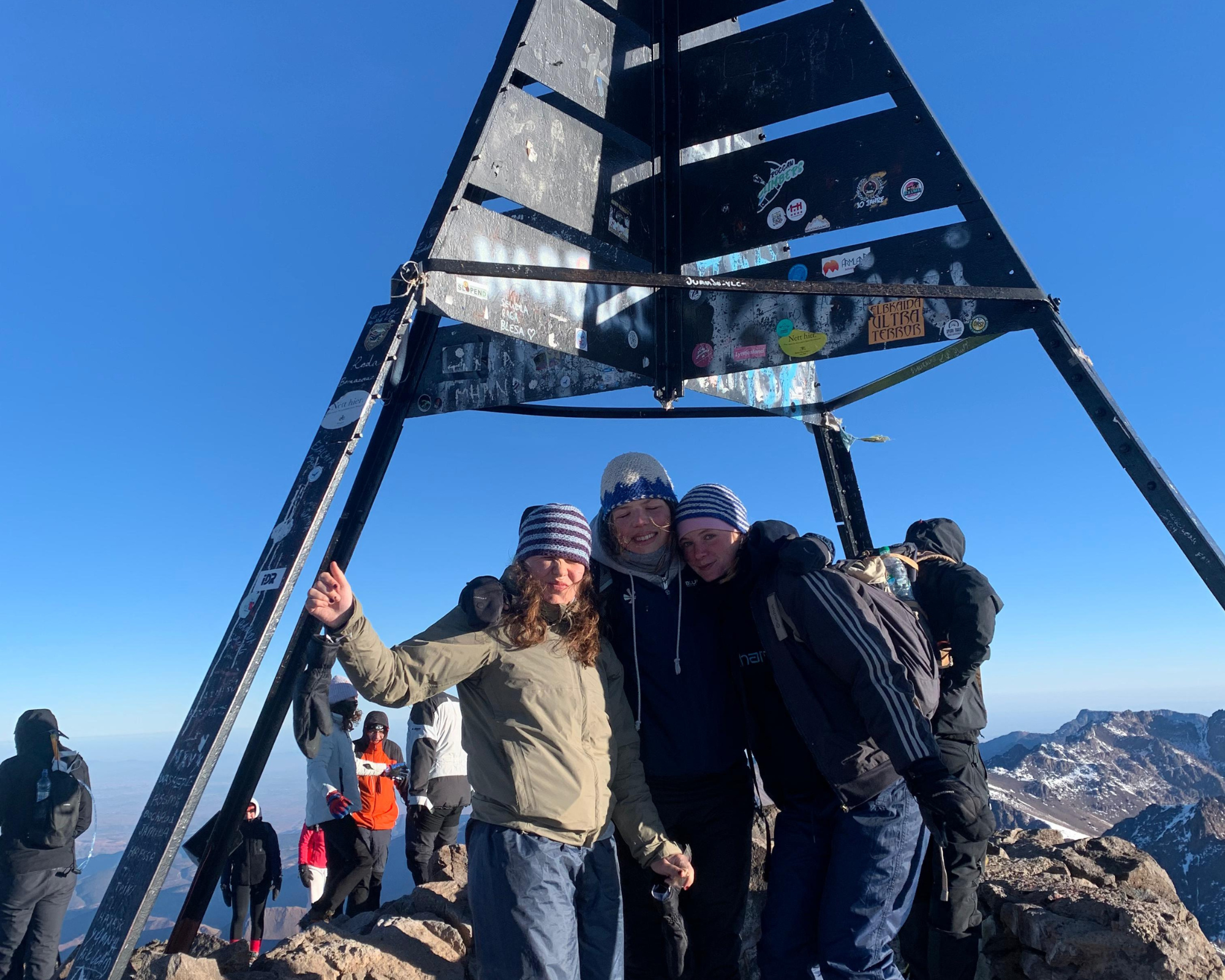
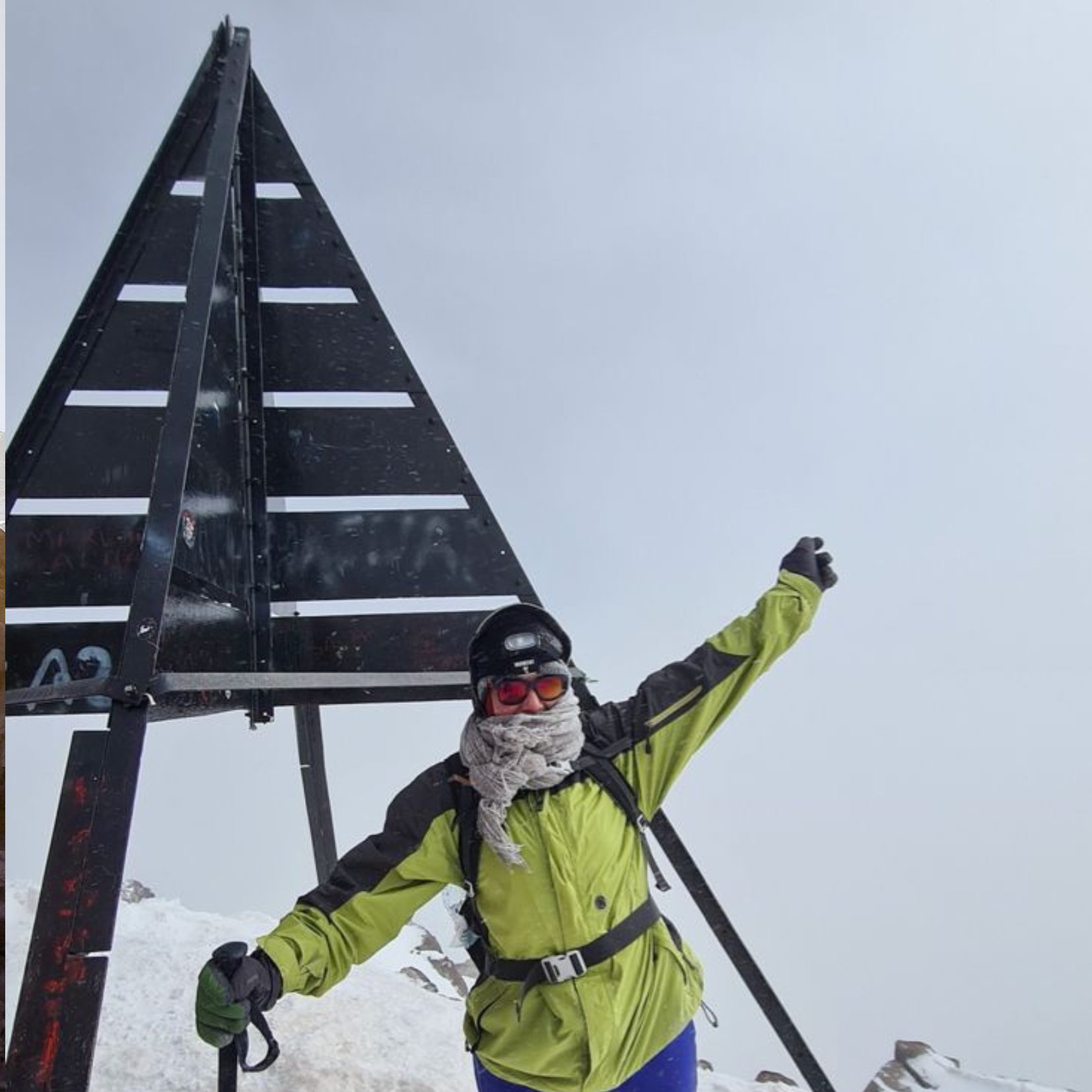
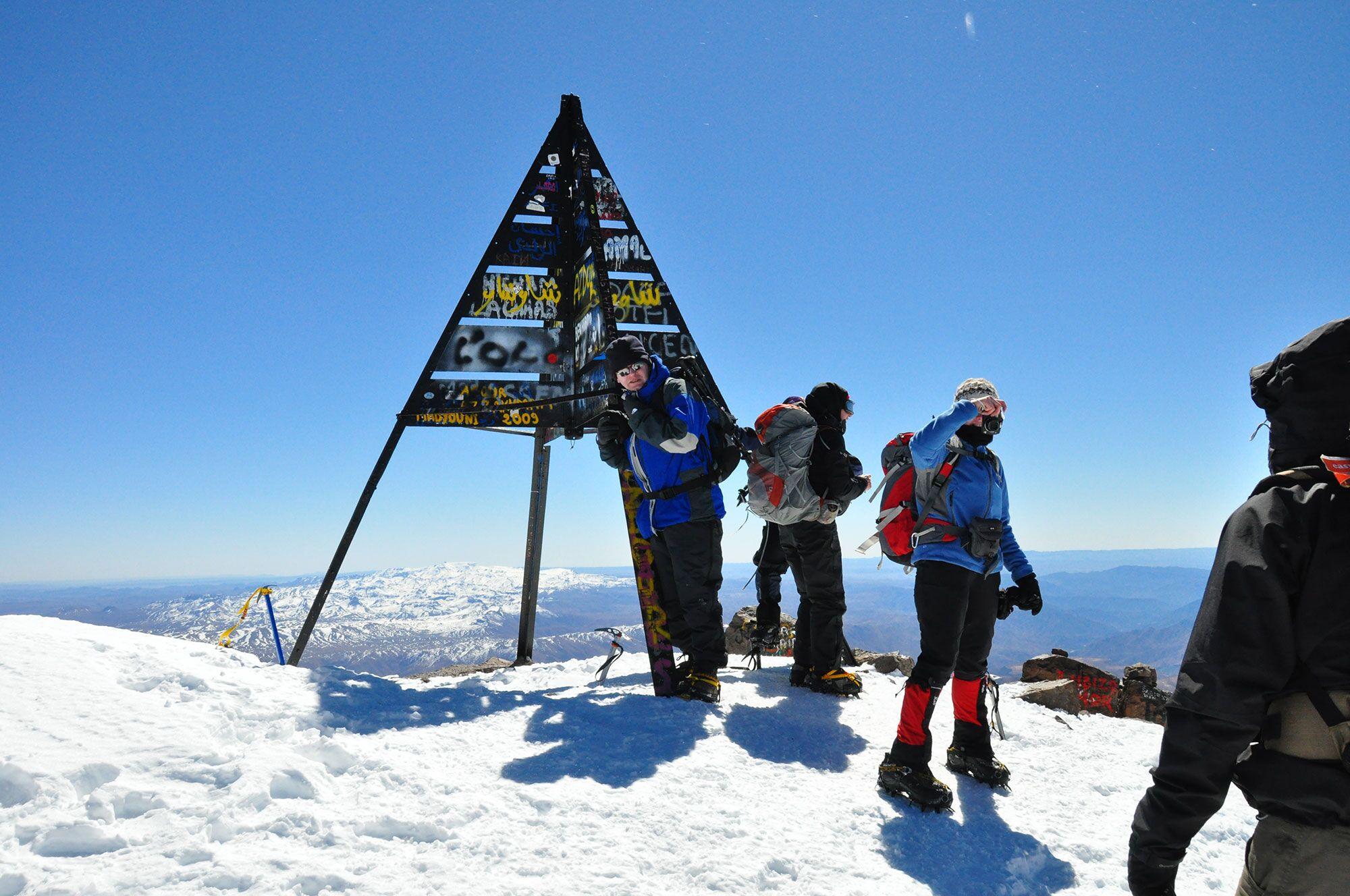
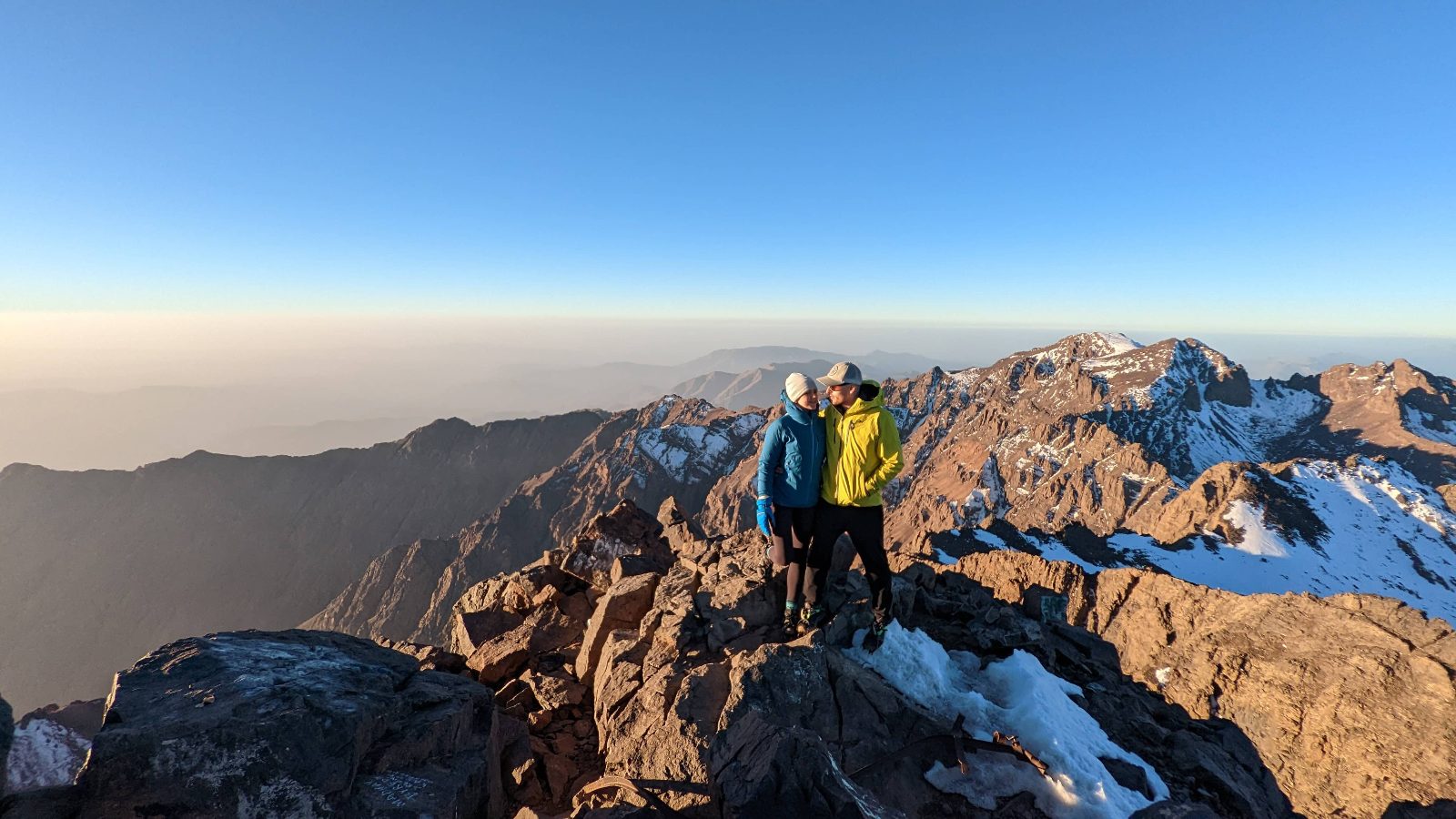
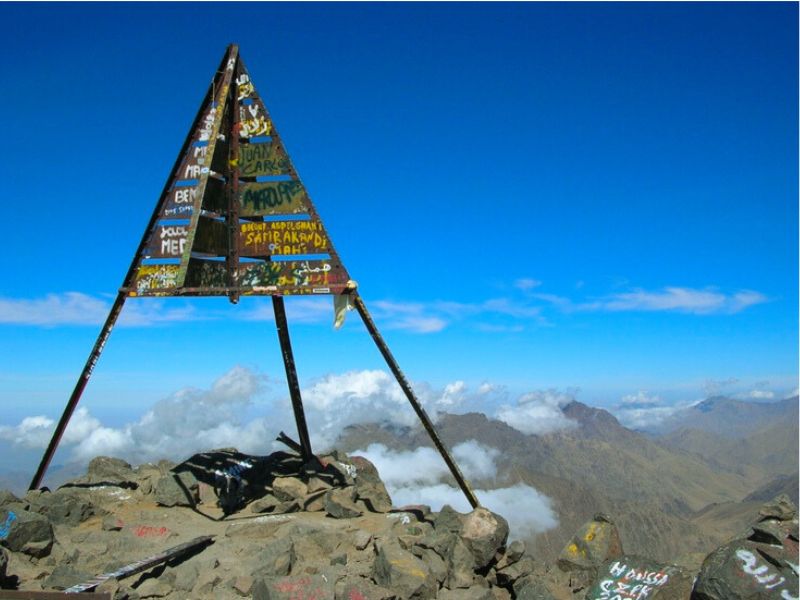
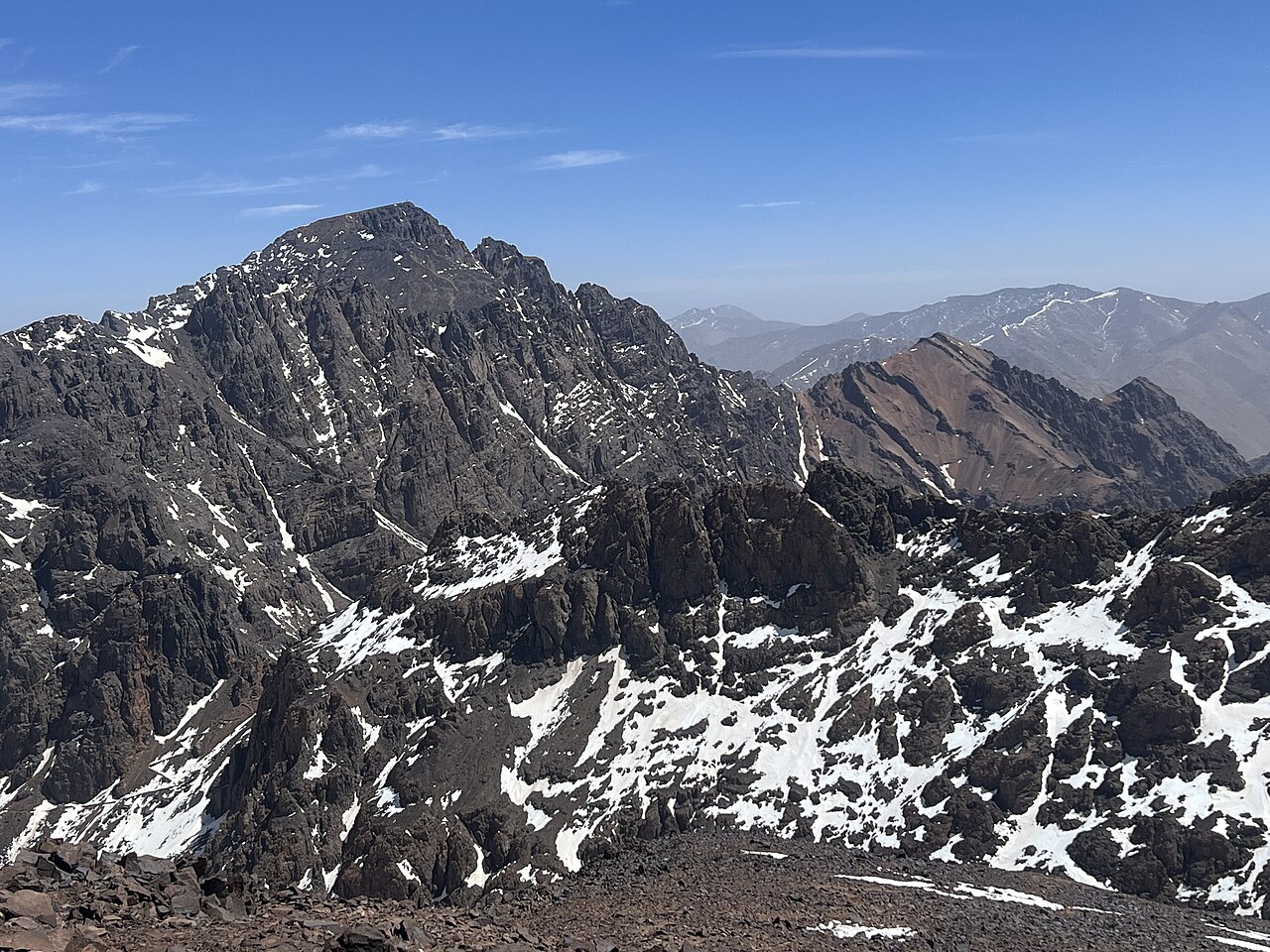
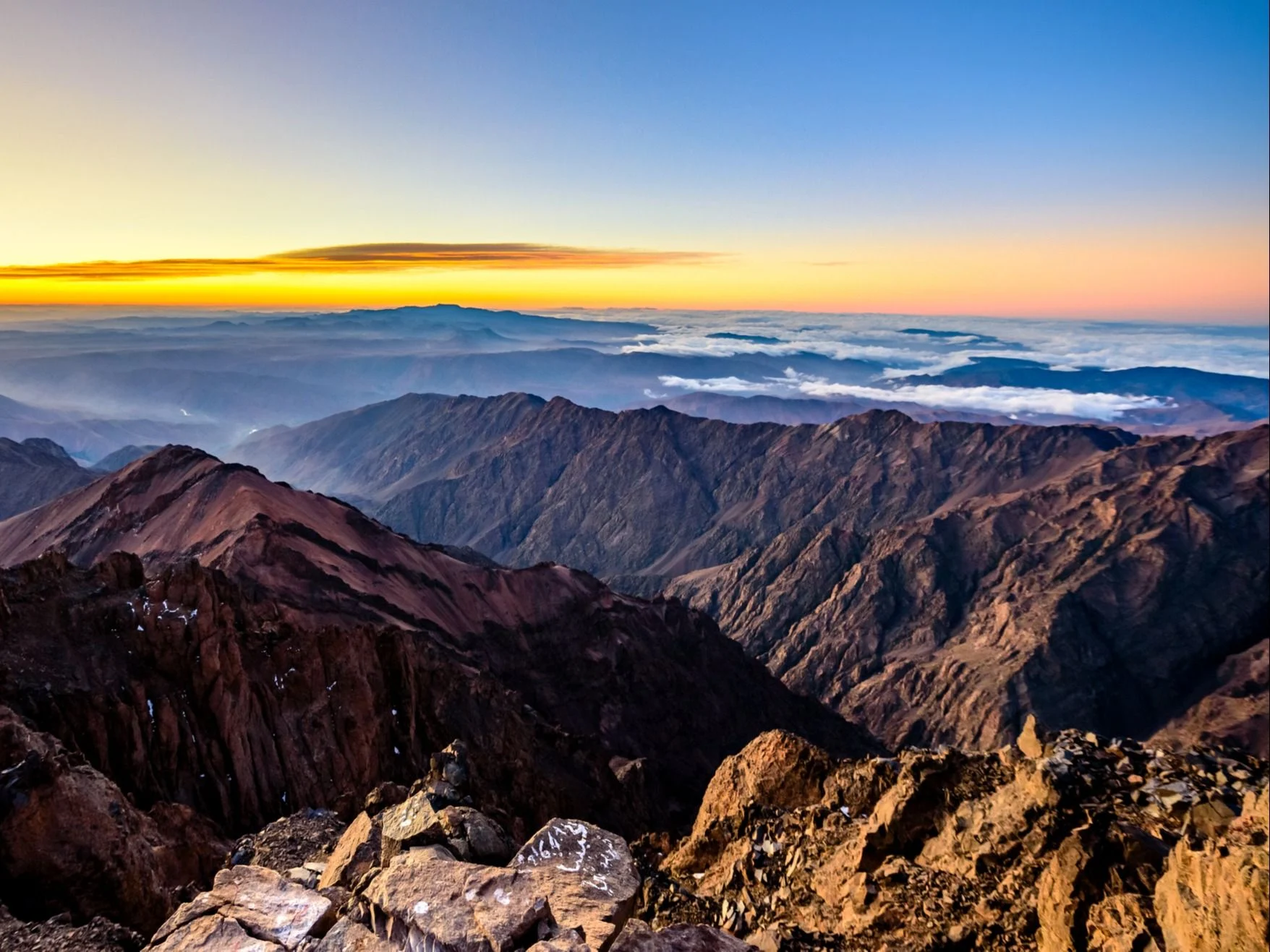
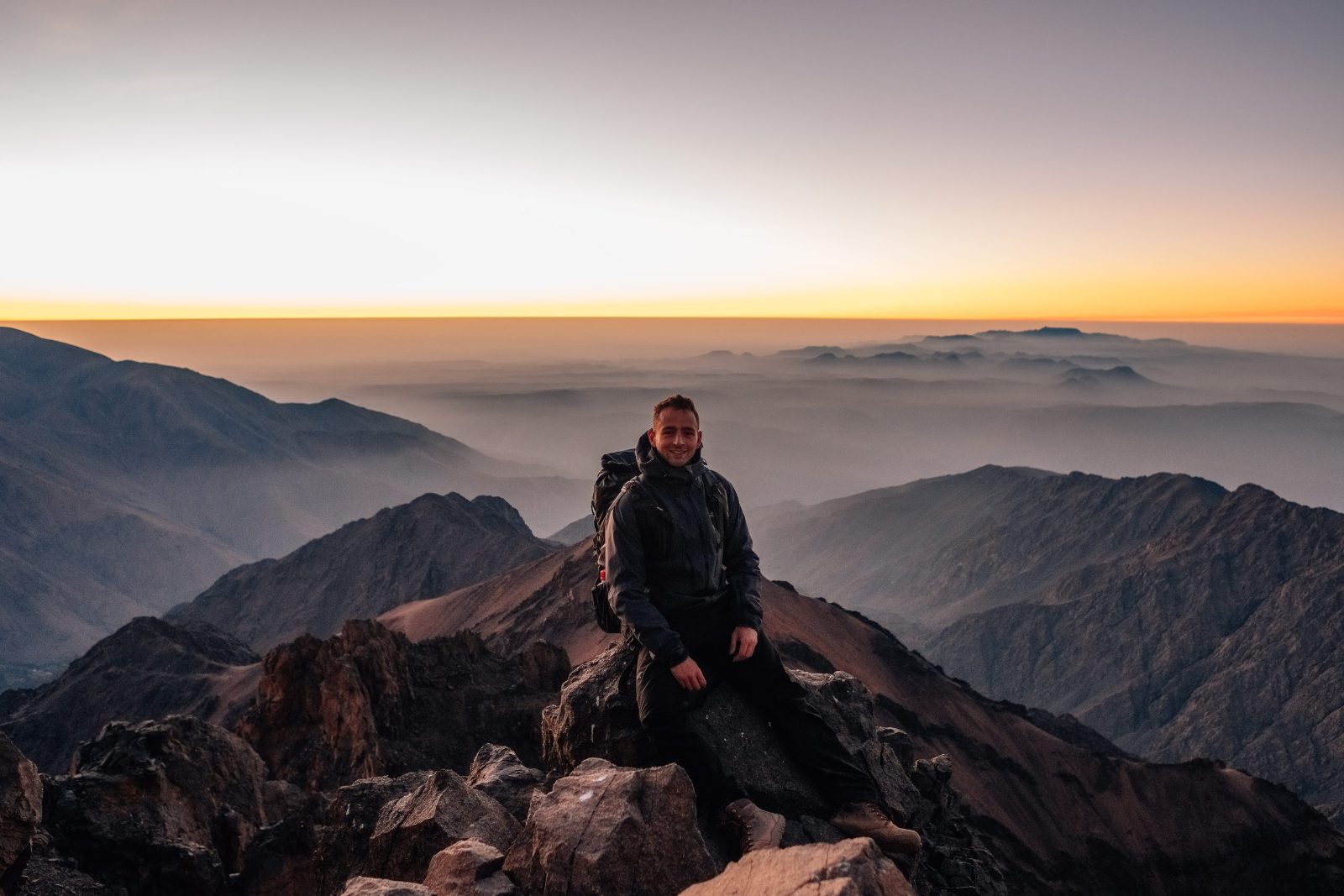
At 4,167 meters, this is the highest point in North Africa, marked by a distinctive metal pyramid frame that trekkers reach after a pre-dawn scree ascent from the refuge. Sunrise views from the summit can extend toward the Sahara on clear autumn mornings.
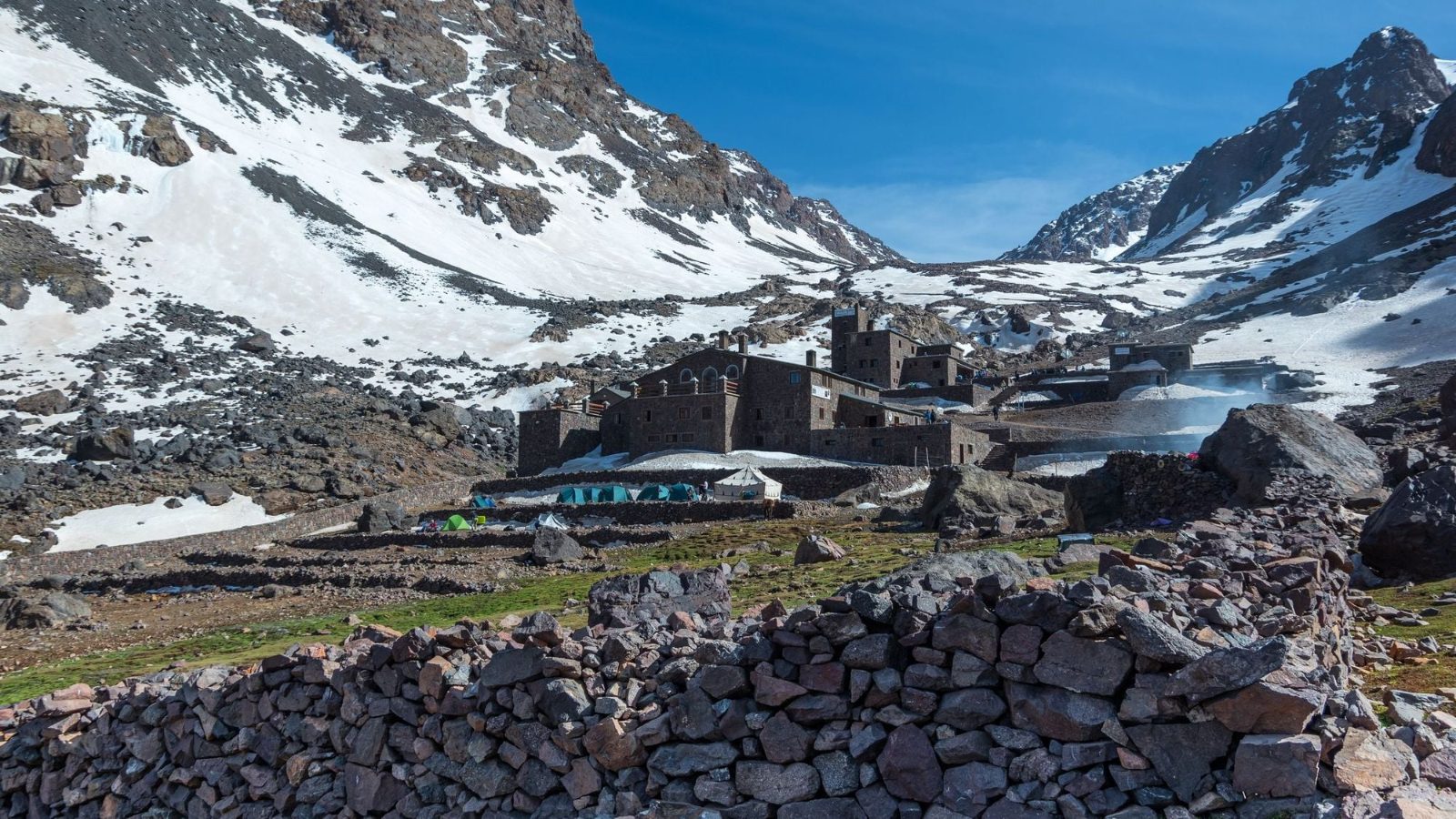
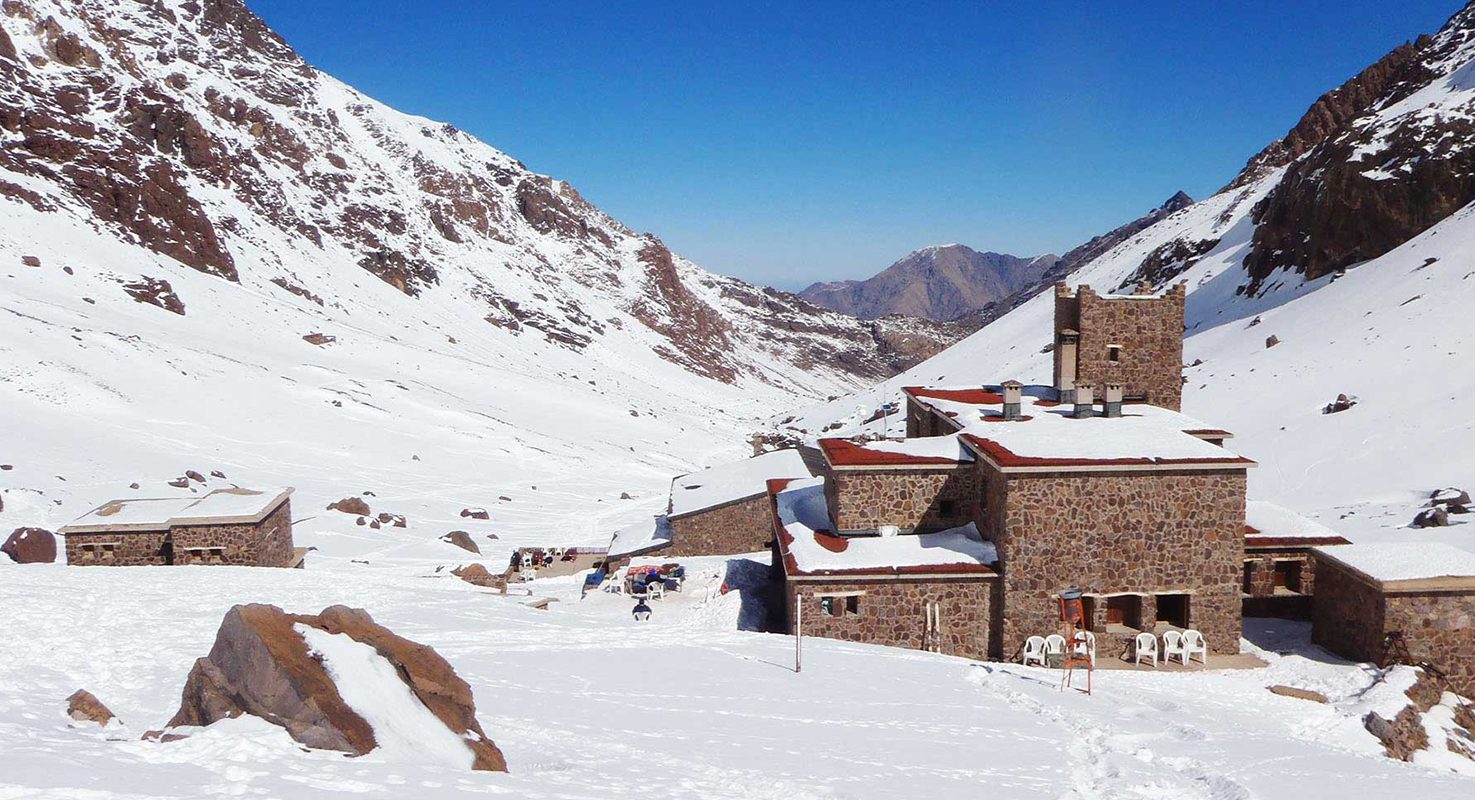
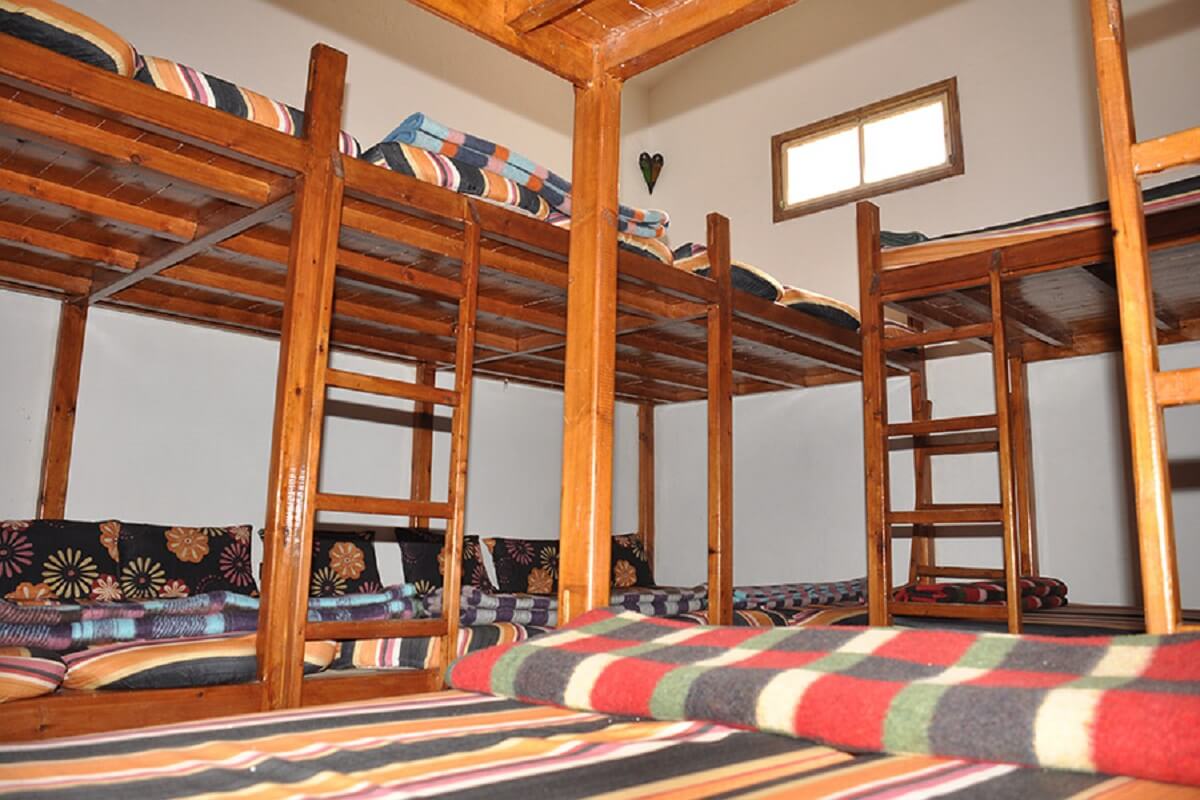
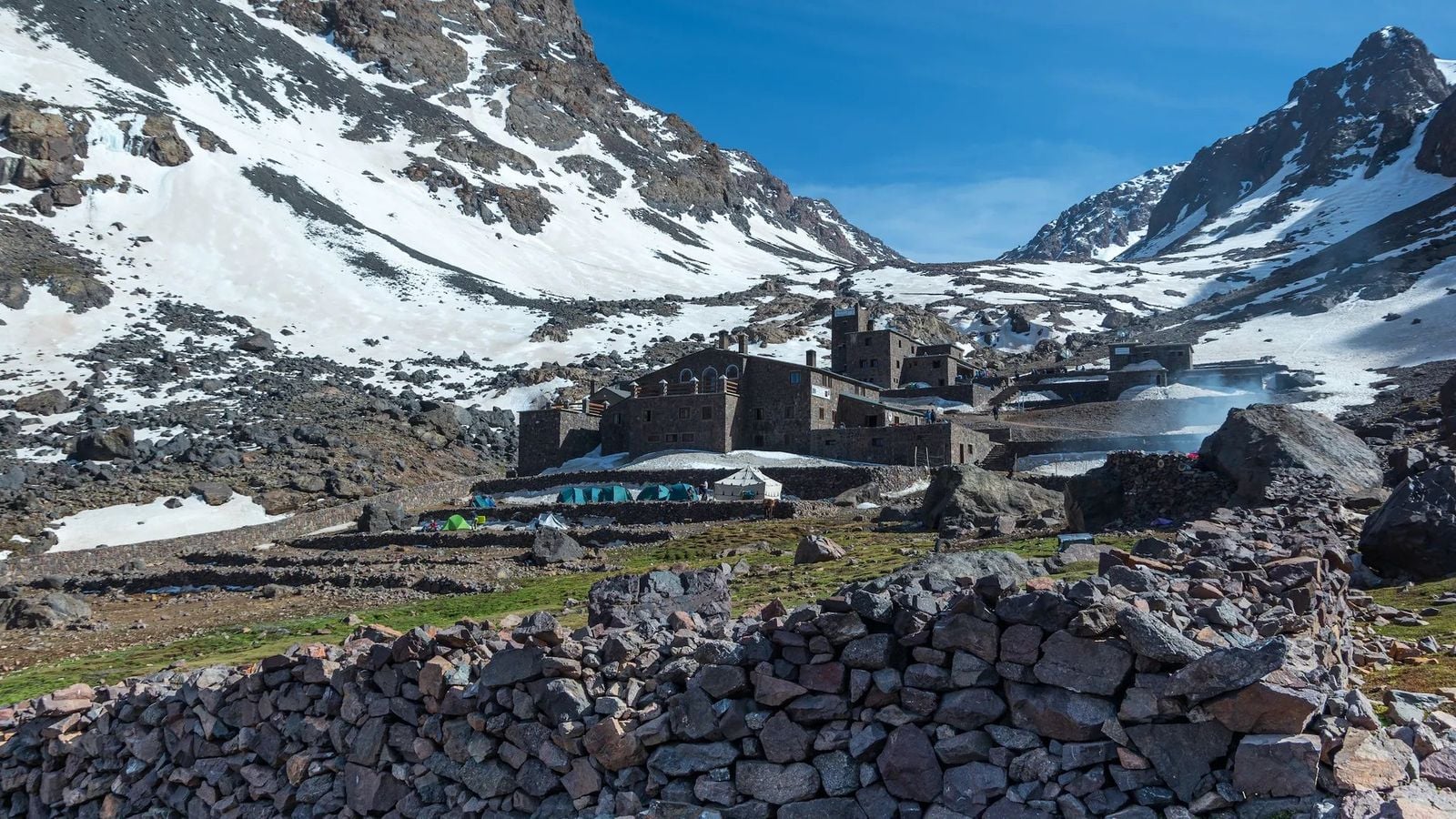
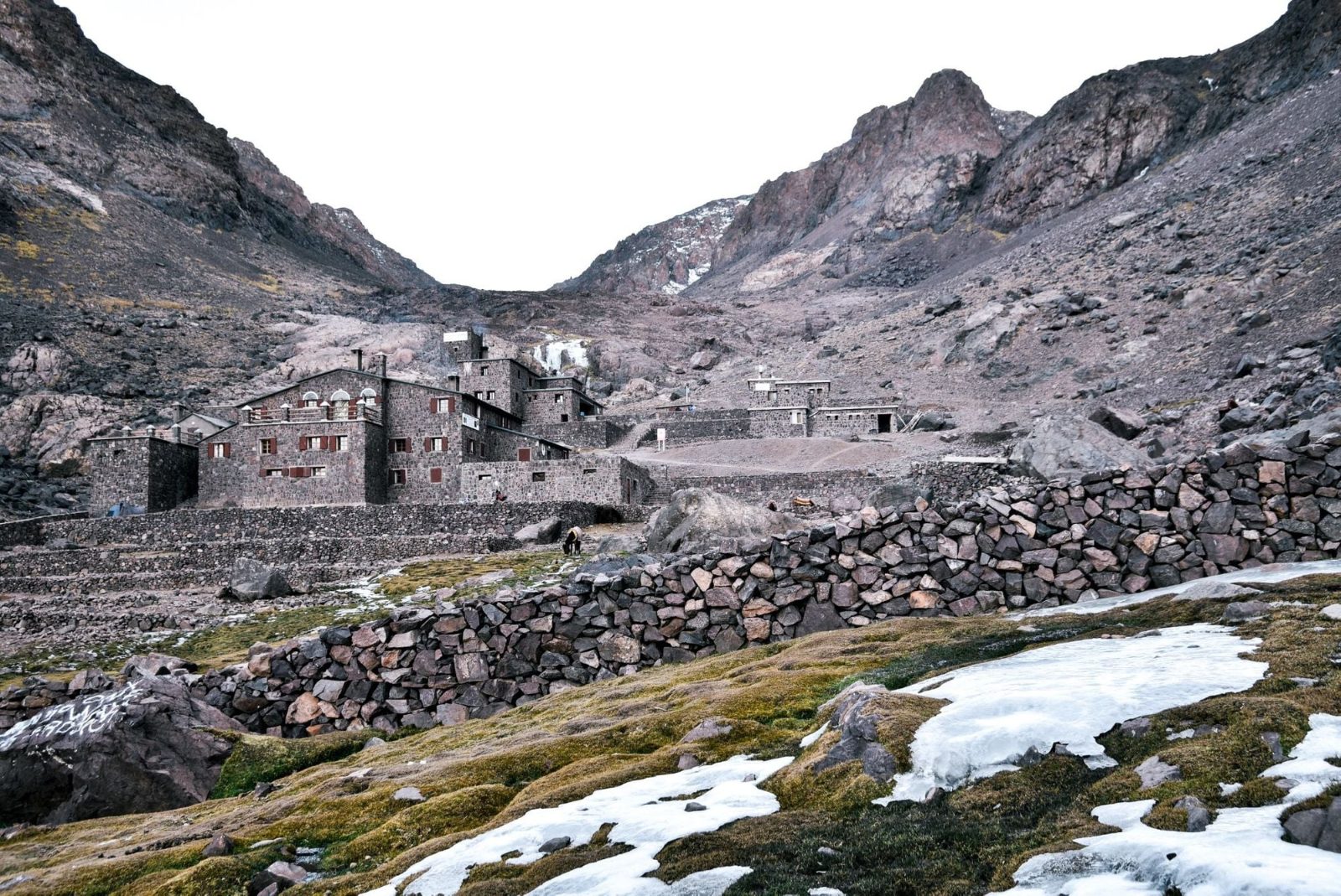
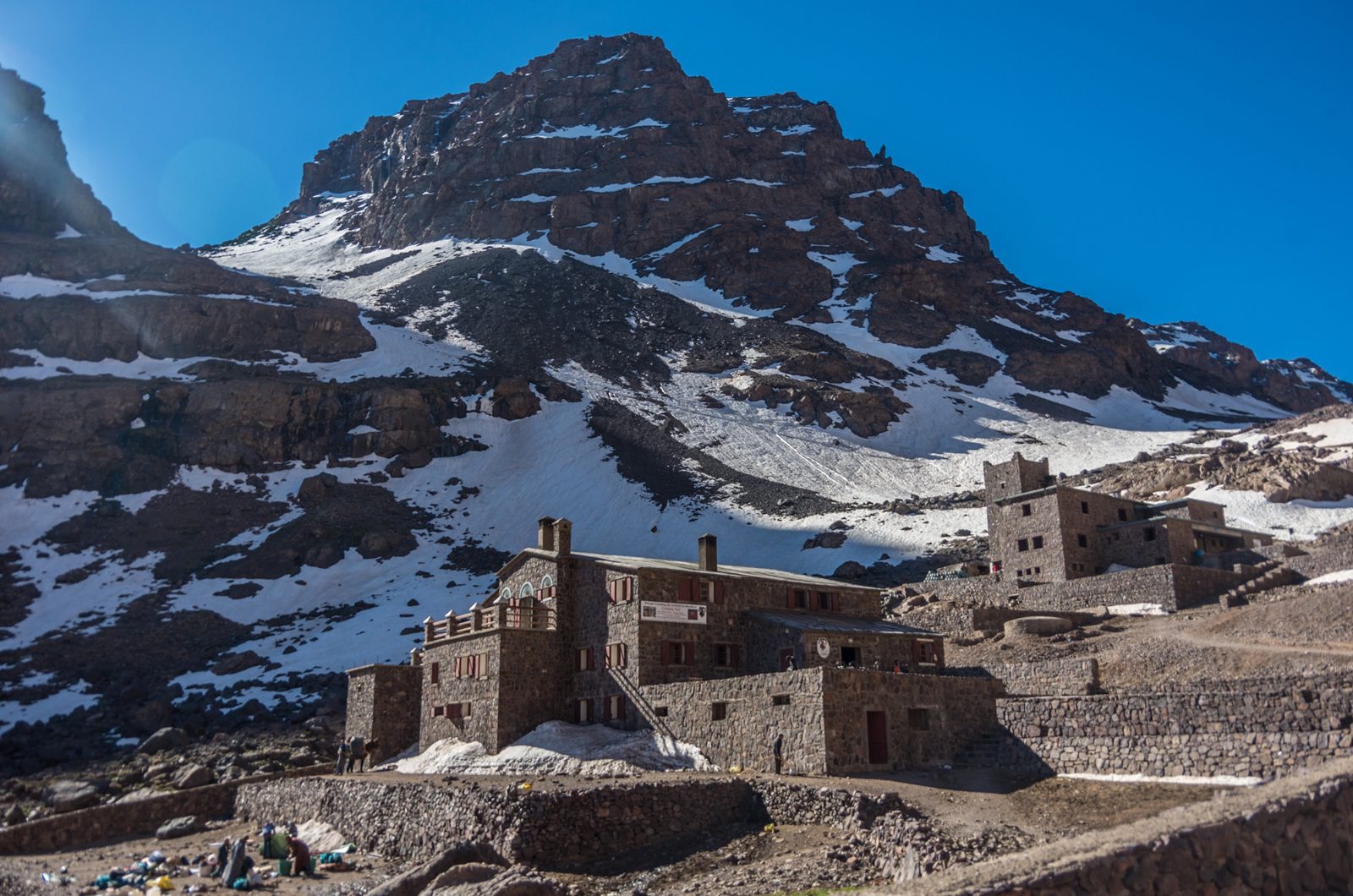
Sitting at 3,207 meters, this dormitory-style mountain hut is the overnight base between the two days of the trek, with basic bunk rooms and a communal dining hall. It can host well over a hundred trekkers during the busy summer season.
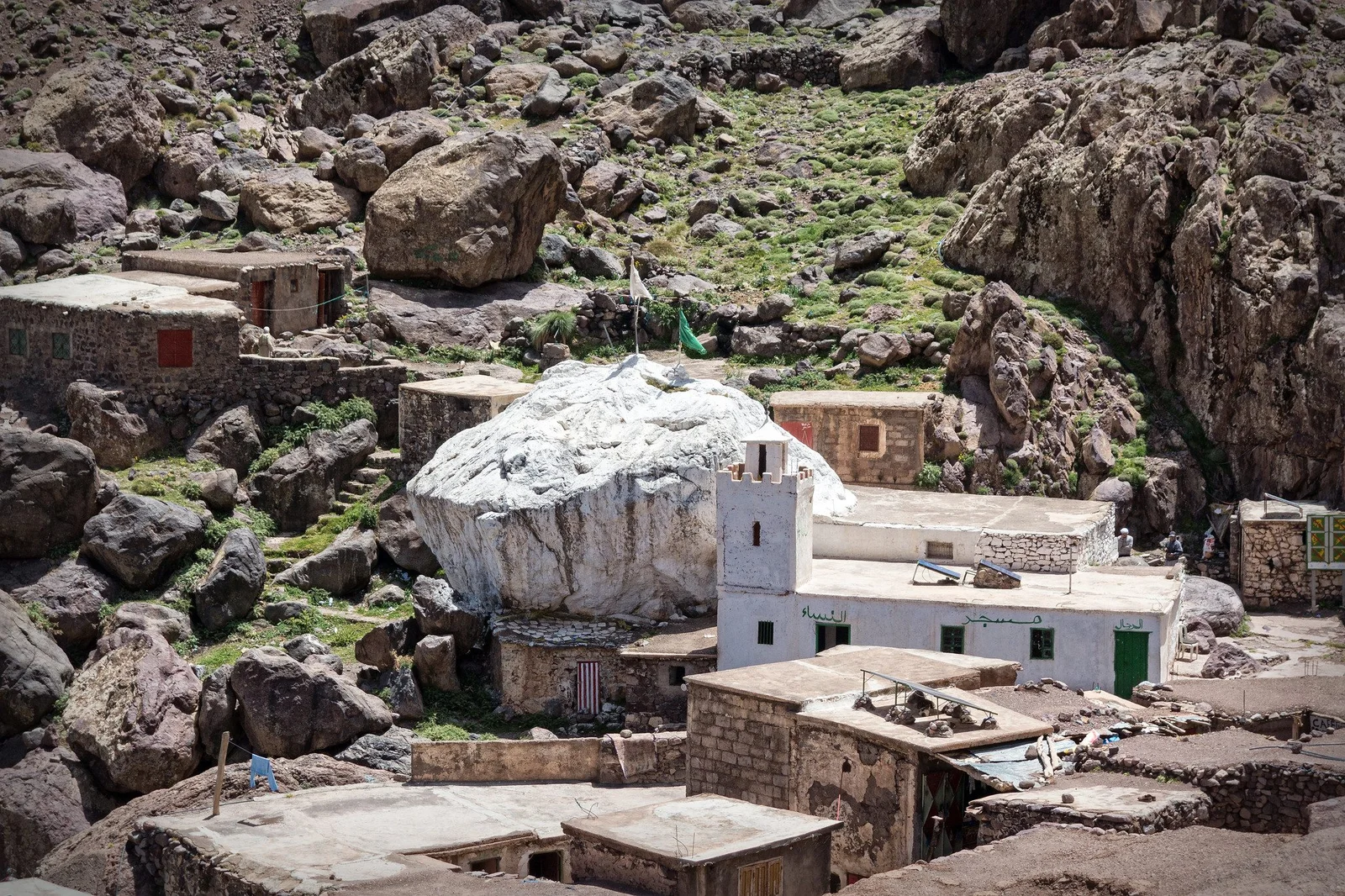
A whitewashed shrine built around a massive boulder, this is a Muslim pilgrimage site roughly halfway along the trail from Imlil, sitting near 2,300 meters elevation. Non-Muslims are asked to stop short of the shrine itself out of respect for local custom.
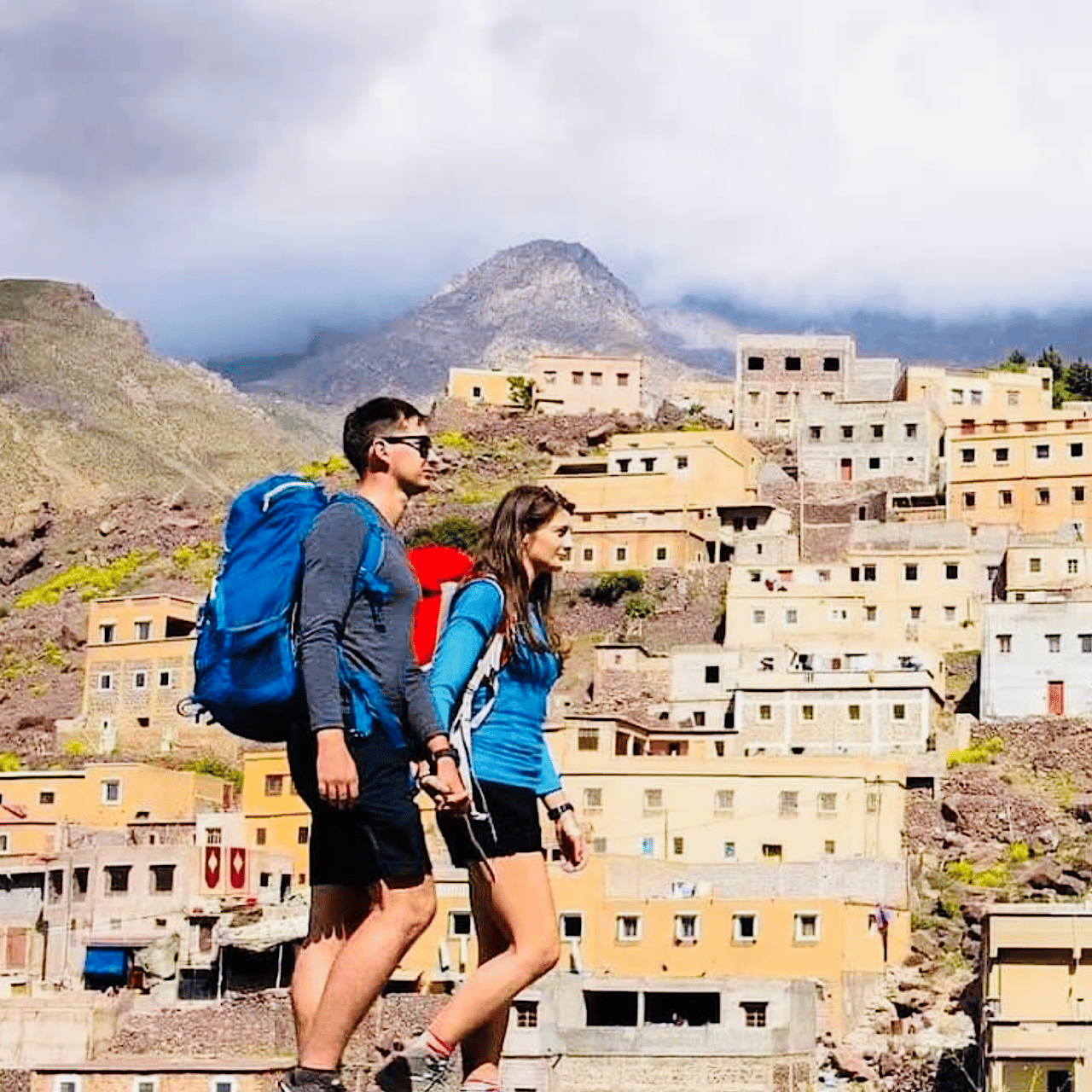
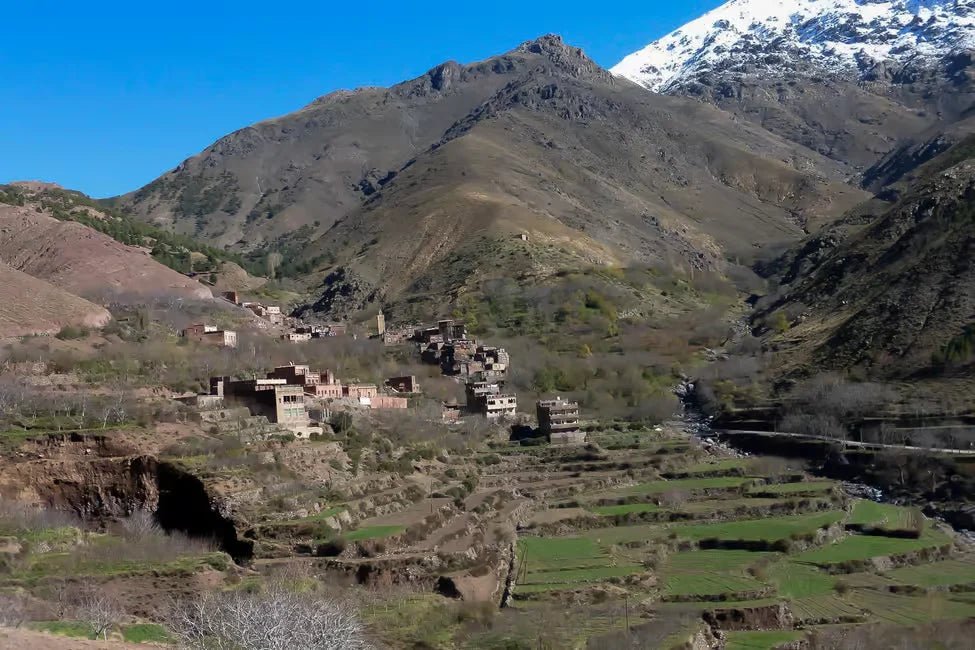
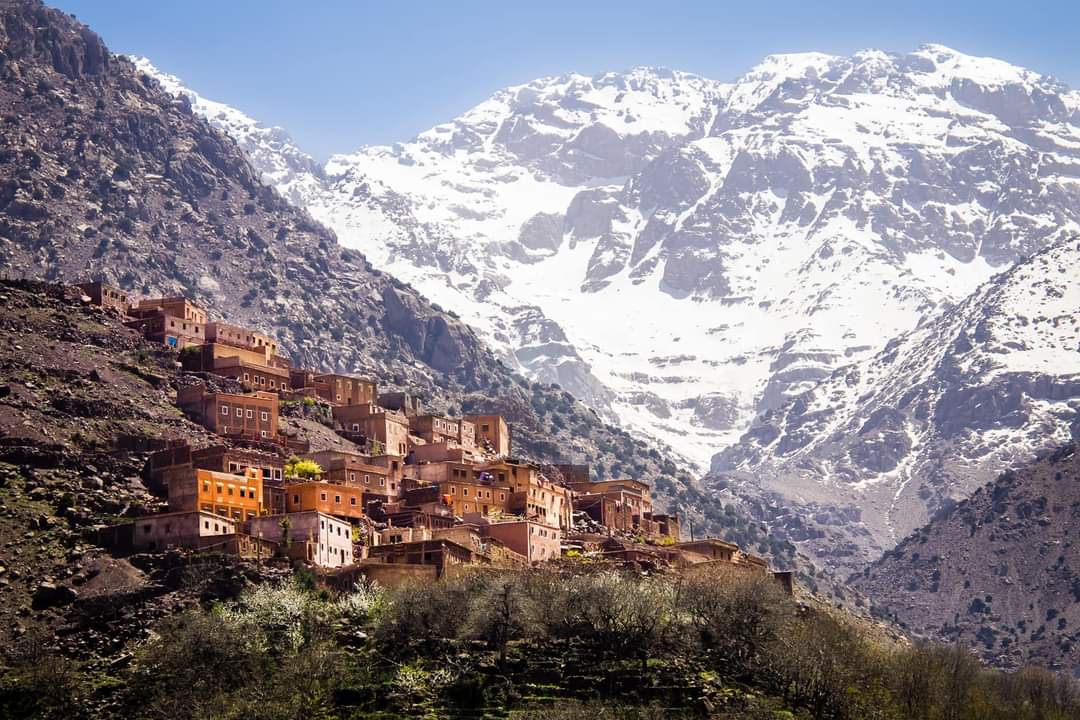
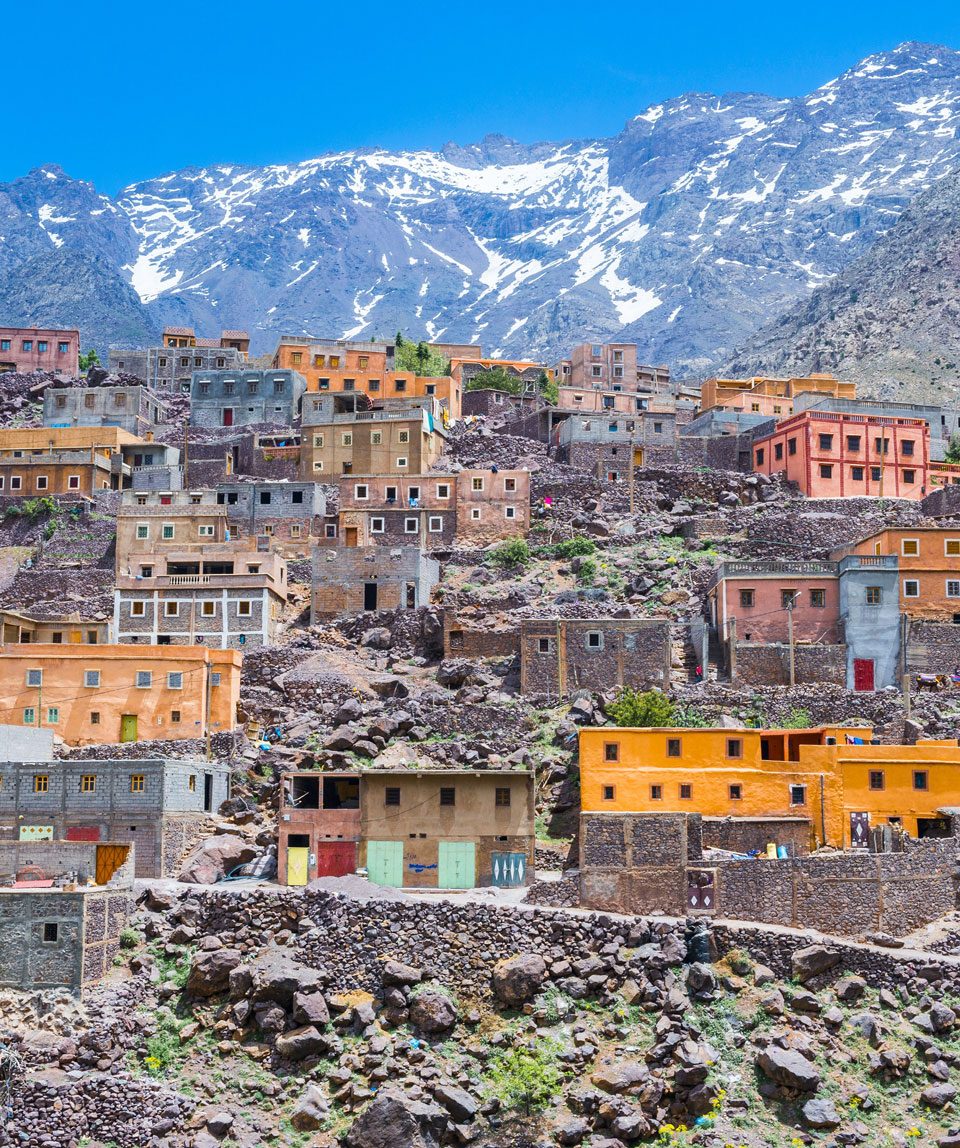
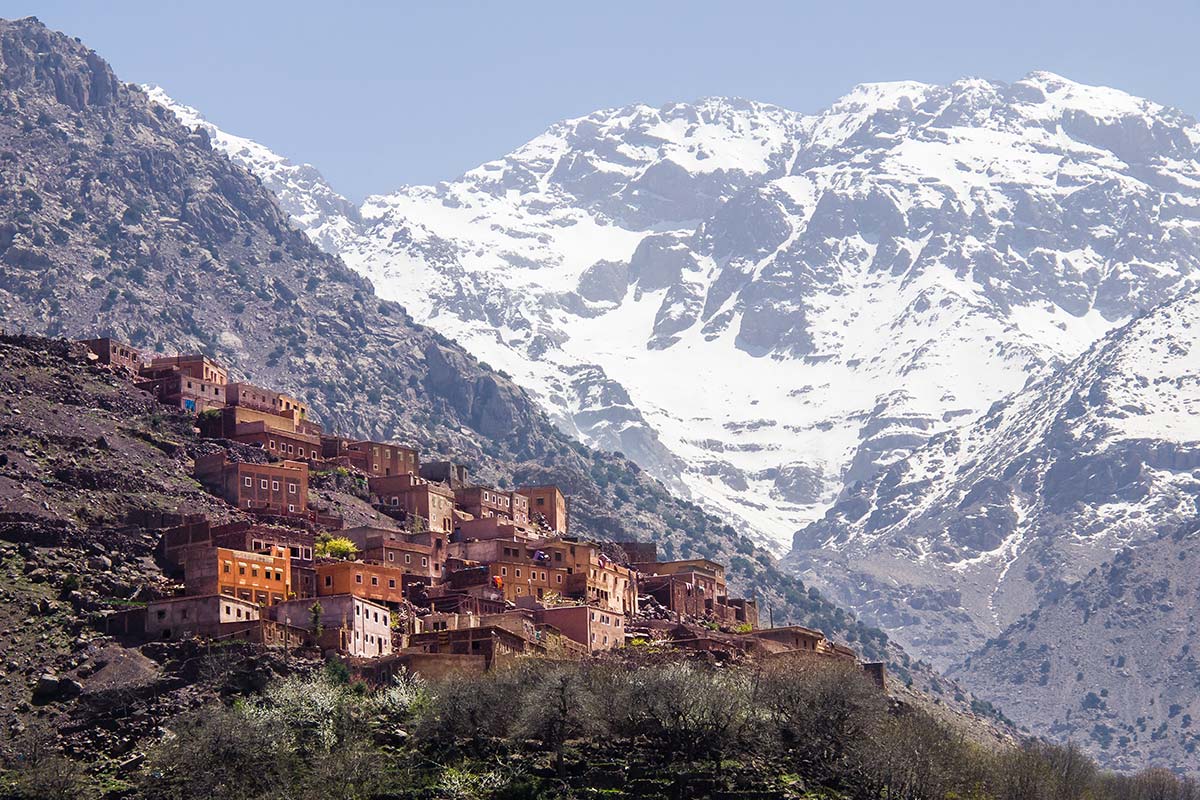
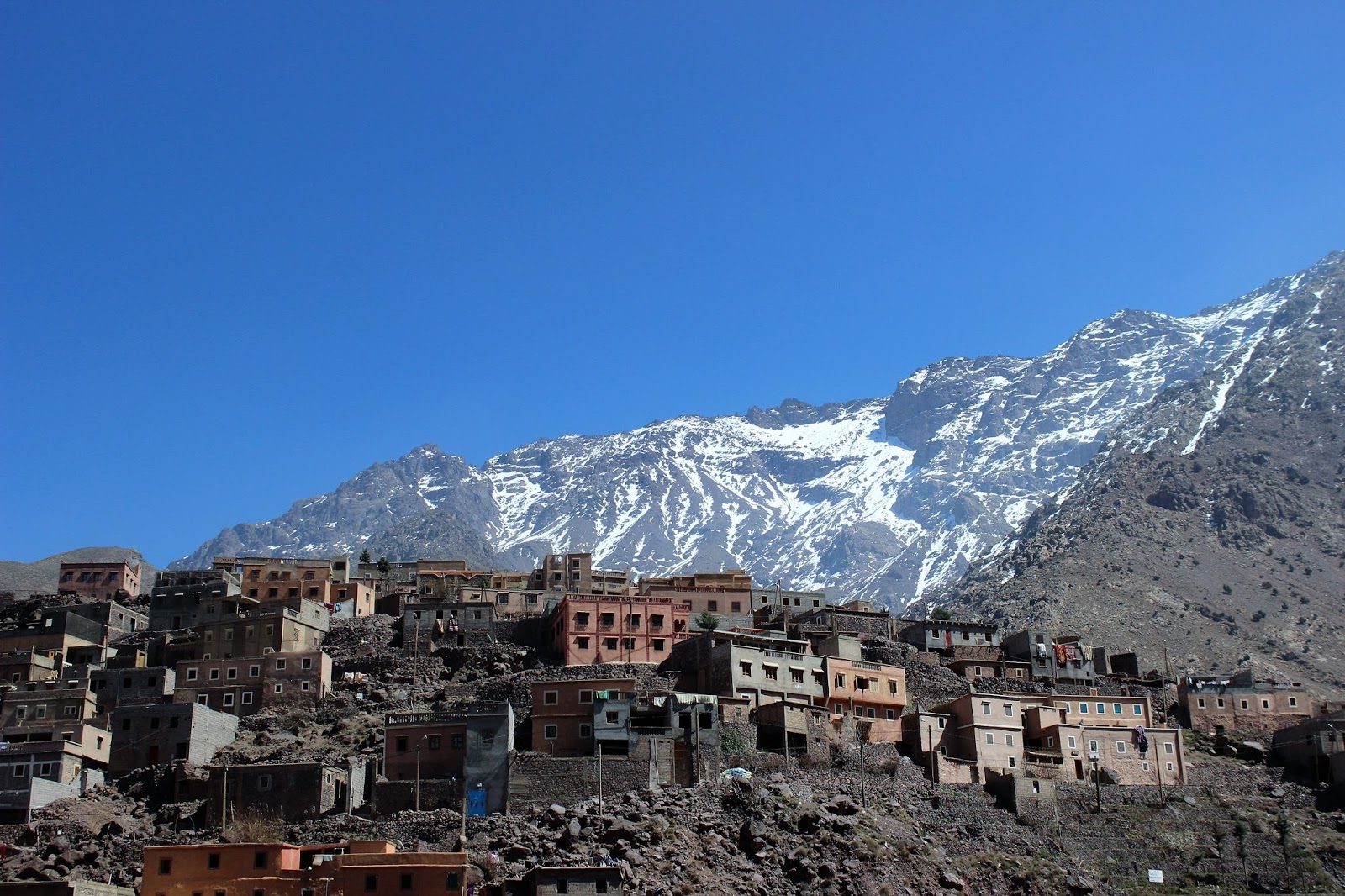
A cluster of flat-roofed stone Berber houses terraced into the hillside above Imlil, Aremd is one of the largest traditional villages in the Toubkal massif. Its irrigated terraces grow walnuts and barley just below the barren upper slopes.
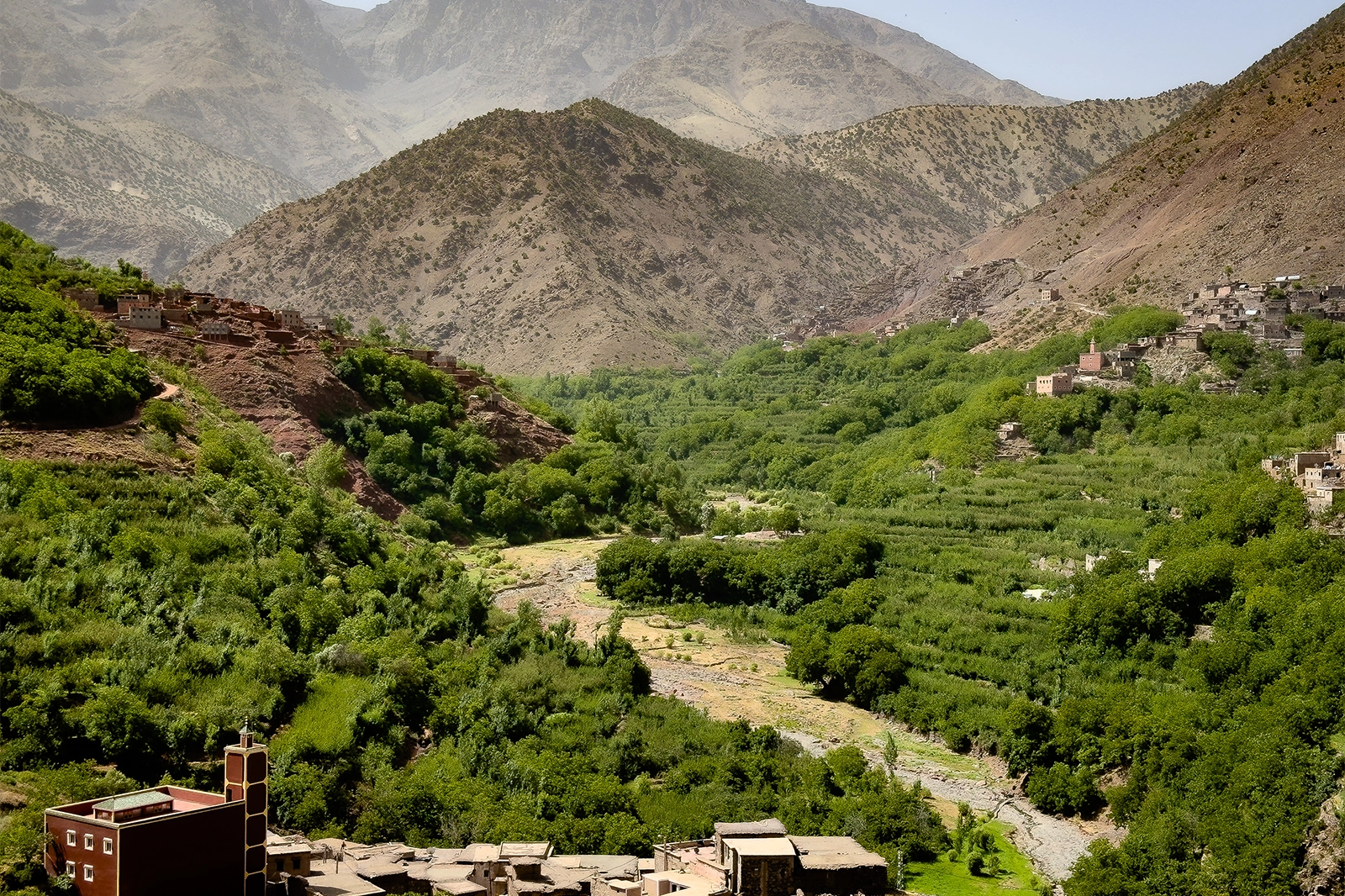
A quieter alternative approach valley west of the main Imlil route, Azzaden offers views of Toubkal's western flank and is used on some extended trekking itineraries. Its lower elevation villages remain green well into autumn.
The slopes around the refuge form part of a protected habitat where Barbary sheep, known locally as mouflon, are occasionally spotted at dawn or dusk. Conservation efforts here are tied to the park's broader status protecting High Atlas biodiversity.
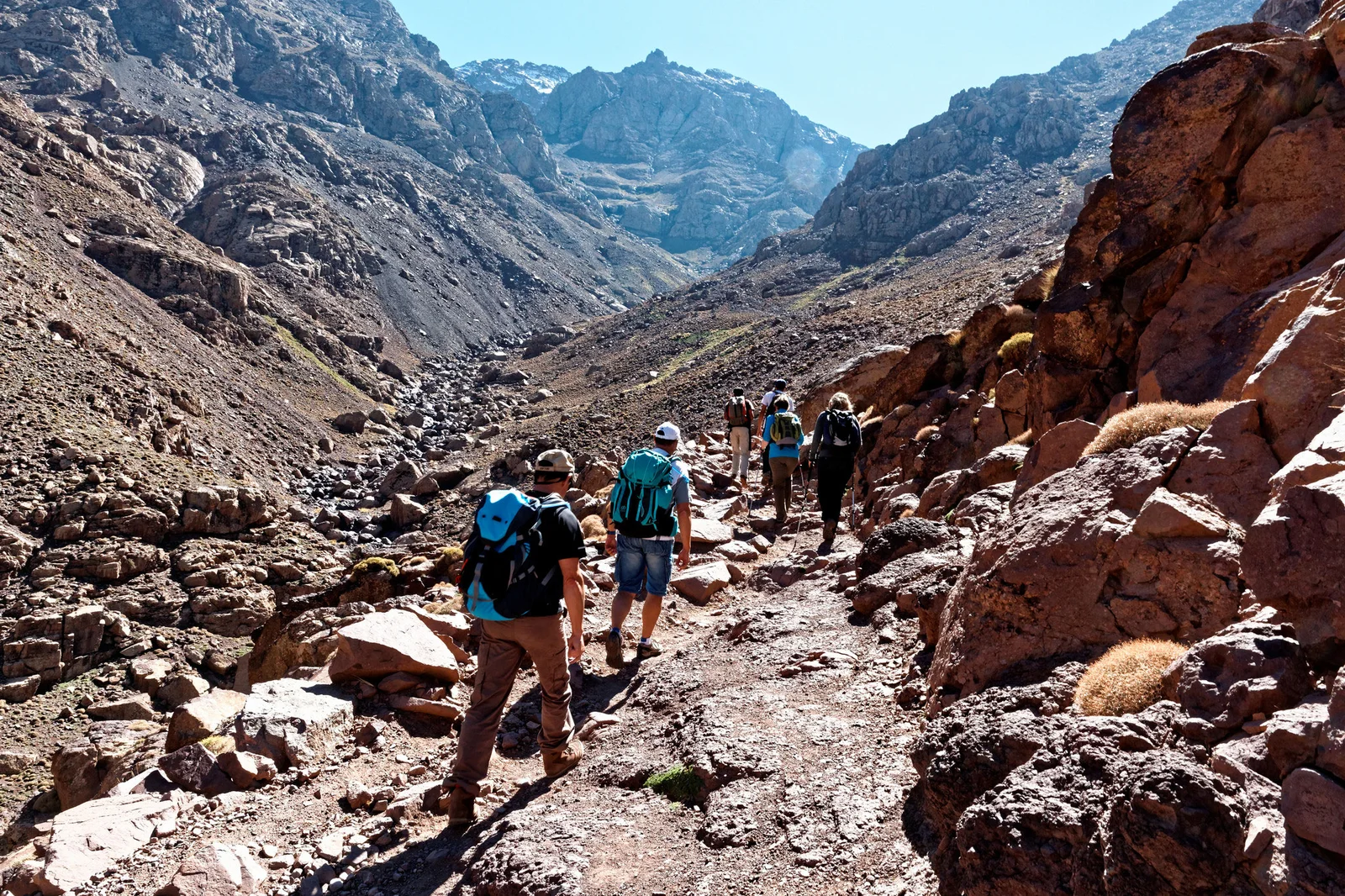
You leave Imlil at first light, crossing a stone bridge over the Mizane where walnut branches shade the path. The trail climbs in switchbacks through terraced barley fields, passing the hamlet of Aremd where mules wait with expedition packs.
Guides set a deliberate pace — the refuge lies five hours ahead, and altitude begins to register above 2,500 metres.
By midday you've reached the Sidi Chamharouch shrine, a whitewashed marabout perched above the gorge where trekkers refill water bottles and rest on flat rocks. The valley narrows. Juniper thins to scrub, then disappears. The final two hours are a relentless incline over loose stone, the refuge visible as a grey silhouette against the ridgeline.
You arrive in late afternoon, claim a bunk, and drink tea on the terrace while the sun drops behind Tizi n'Ouanoums. Dinner is tagine and bread. You sleep in layers; the dormitory is cold. At four a.m. the guide wakes the group. Headlamps bob up the scree couloir, a single-file chain threading toward the false summit. The final push is a scramble over boulders, hands gripping iron cables, breath tight in the thin air. You reach the cairn at dawn, the Atlas unfolding in every direction.
Todos os detalhes da sua próxima aventura em um só lugar
North Africa's highest summit was first documented by European climbers in 1923, though Berber shepherds had traced the ridgelines for centuries before cartographers arrived.
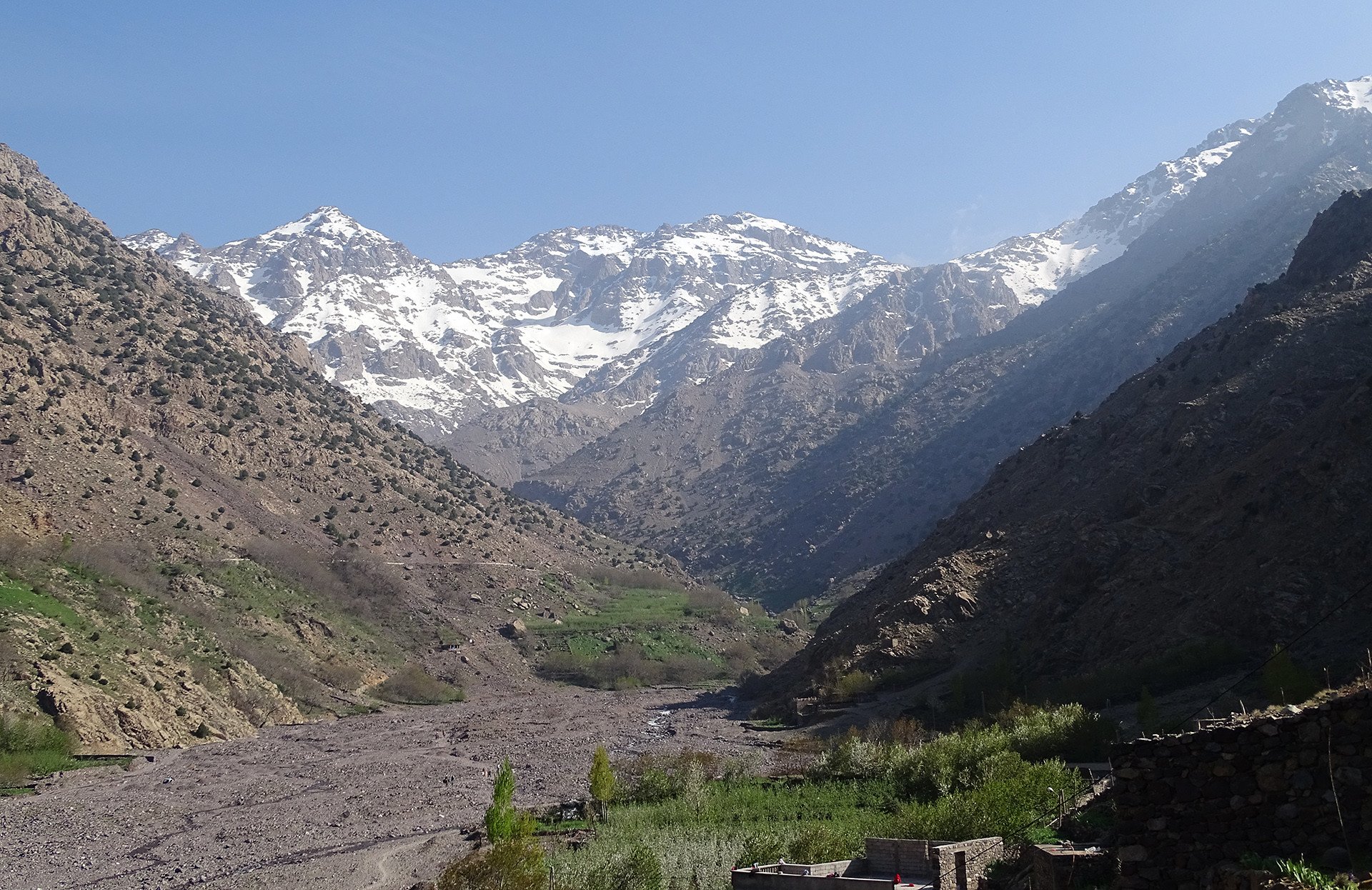
Jebel Toubkal rises to 4,167 metres above the Mizane Valley, a solitary pyramid of scree and limestone that dominates the winter skyline of Marrakech, 63 kilometres to the north. The mountain sits within Toubkal National Park, a 38,000-hectare reserve established in 1942 to protect the juniper forests and mouflon herds of the High Atlas watershed. Snow lingers on the north face until June; by August the approach paths are bare red earth and the refuge terrace crowded with trekkers.
The mountain's appeal rests less on technical difficulty than on verticality compressed into two walking days. The standard route from Imlil village climbs 2,400 metres through walnut groves, across the Mizane riverbed, and up switchbacks to the Toubkal Refuge at 3,207 metres. Summit day begins before dawn, a four-hour ascent over scree slopes and short scrambles to a cairn-marked plateau where three provinces meet. On clear mornings the Anti-Atlas folds south to the Sahara; the Atlantic glimmers west beyond the Tizi n'Test pass. Descent retraces the route, reaching Imlil by mid-afternoon.
Guided treks are mandatory under Moroccan mountain law, a regulation that funnels all ascents through licensed bureaux in Imlil. Most operators package the climb with refuge bunks, meals cooked on propane stoves, and mule transport for overnight packs. The refuge itself is a stone barracks rebuilt in 1999, unheated but solid, with dormitories sleeping eight and a communal dining hall where guides brew mint tea after dark. Mobile signal reaches the lower valleys but fades above 2,800 metres. Water sources are reliable in spring and autumn; summer trekkers rely on bottled reserves carried by mule.
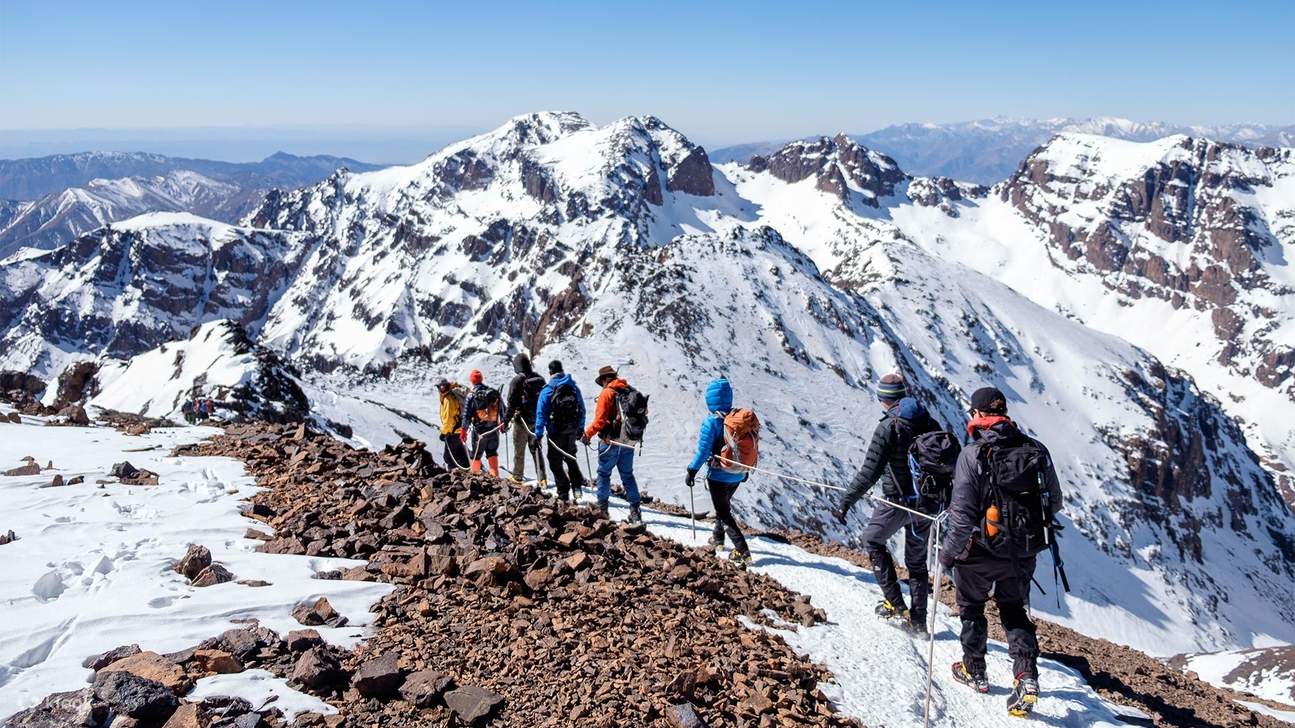
The two-day format suits trekkers with moderate fitness and limited schedules. Acclimatization is minimal — summit altitude exceeds 4,000 metres and most climbers ascend from Marrakech's 450-metre elevation within 36 hours — so mild headache and shortness of breath are common above the refuge. Crampons are required December through March when the upper couloir holds ice; June through October the route is a non-technical hike, steep but walkable, with fixed cables on exposed sections near the summit ridge.

On clear mornings the Anti-Atlas folds south to the Sahara; the Atlantic glimmers west beyond the Tizi n'Test pass.
Layered clothing is essential for a Mount Toubkal trek 2 days itinerary since temperatures swing from warm sun in Imlil to near-freezing conditions at the Toubkal Refuge around 3,207 meters. Sturdy waterproof hiking boots, a warm insulated jacket, and a hat are standard; in early season, gaiters help with lingering snow patches near the summit.
There is no security screening at the park entrance, but a daypack for water, snacks, and layers is standard while a mule typically carries the main overnight bag to the refuge. Guides and refuge staff commonly ask trekkers to keep valuables and passports on their person rather than with transported luggage.
Personal photography is unrestricted along the trail, at the Toubkal Refuge, and at the summit marker, with no permit or fee required. Drone use in Toubkal National Park requires prior authorization from Moroccan authorities and is not permitted casually.
Children on a Mount Toubkal trek 2 days route should be experienced walkers, generally recommended at age 10 and above given the 6-7 hour summit day and thin air near the top. Mules can carry gear so kids aren't burdened with heavy packs, but the terrain still demands steady footing and stamina.
The route to the Toubkal Refuge and summit involves a steep, rocky, multi-hour ascent unsuitable for wheelchairs or limited mobility, with no paved paths or accessible facilities. Trekkers with respiratory or cardiac conditions should consult a doctor before attempting the altitude gain to the 4,167-meter summit.
Meals are provided at the Toubkal Refuge (breakfast, dinner, and packed lunch) as part of most trek packages, and refuge staff can accommodate basic dietary requests with advance notice. Bottled water is sold at the refuge, though many trekkers carry a filter or purification tablets for trailside streams.
Quiet midweek trail traffic
Busiest with weekend groups
Best arrival window
07:00–10:00 — start early to reach the refuge in 4-5 hours before afternoon heat
Address
Toubkal National Park, High Atlas Mountains, Imlil, Morocco
Terrain
Steep mountain trail, not wheelchair accessible, sturdy hiking boots required
Climate
High-altitude sun exposure by day, near-freezing nights at the refuge
Fee
Free entry to the park; a licensed mountain guide is mandatory by law
Guide requirement
Bureau des Guides in Imlil assigns certified guides for the ascent
Car · 1h30 · Private transfer or grand taxi
Drive from Marrakech south on the road to Asni, then continue to Imlil village where the trailhead begins.
Taxi · 1h45 · Budget-friendly shared fare
Shared grand taxis run from Marrakech's Bab Doukkala area to Asni, with a transfer to a smaller taxi for the final stretch to Imlil.
Public transport · 2h · Low cost, less flexible schedule
Local buses connect Marrakech to Asni, followed by a shared or private taxi for the last leg into Imlil.
Walk · 4-5 hours to refuge · No cost, guide required
From Imlil village center, the trailhead toward Sidi Chamharouch and the Toubkal Refuge begins on foot.
Most Mount Toubkal trek 2 days bookings allow free cancellation up to 48-72 hours before departure, with a full refund on the tour cost since the park itself charges 0 MAD entrance fee. Cancellations made closer to departure may forfeit guide and mule porter fees already committed on your behalf.
Recommended time
2 days, 1 night
A mount toubkal trek 2 days itinerary runs roughly 8-9 hours of walking across two days: day one covers Imlil to the Toubkal refuge (around 4-5 hours), day two is the pre-dawn summit push and full descent back to Imlil. Starting inside the 07:00-10:00 window on day one is what keeps the climb to the refuge out of the harsh afternoon sun, since trailhead traffic is light before mid-morning. Add time if the group is unacclimatized or if mules are needed for gear; the summit morning has no queue, but the narrow scree sections near the top can bottleneck when several trek groups leave the refuge at the same pre-dawn hour.
Crowd levels through the day
Clima · afluência · preço médio — os pontos passam de verde a âmbar e vermelho conforme cada indicador sobe.
Snowmelt is underway but upper sections can still hold snow through May, requiring crampons in some years. Wildflowers appear in the valleys and daytime temperatures are mild.
The most reliable window with clear trails and warm daytime temperatures, though the summit remains cold and windy year-round. This is peak season for a Mount Toubkal trek 2 days itinerary with the highest refuge occupancy.
Currently the season in progress, offering stable weather, clear skies, and cooler comfortable hiking temperatures without summer crowds. Late October can bring the first light snow near the summit.
Snow and ice cover the upper mountain, requiring crampons, an ice axe, and winter mountaineering experience. Only experienced trekkers with proper gear should attempt the ascent in these months.
A licensed guide from the Bureau des Guides in Imlil is mandatory, and popular autumn weekends can book up, so arranging a Mount Toubkal trek 2 days tour ahead of arrival avoids delays.
Temperatures at the refuge drop well below those in Imlil, so bring a warm layer even if the valley feels mild.
Local muleteers can carry overnight bags to the refuge for a set fee, letting trekkers hike with just a light daypack.
There are no ATMs in Imlil or at the refuge, so bring Moroccan dirhams for guide tips, mule fees, and refuge extras.
The descent on loose scree is hard on unbroken-in footwear, so test boots on a few practice hikes first.
Imlil and Aremd are traditional communities, so modest dress and greetings in passing are appreciated.
Conditions can shift quickly at altitude, and guides may adjust the summit day schedule based on wind or cloud cover.
Imlil village center, High Atlas Mountains, Morocco
Official guide dispatch point for all Toubkal treks
Get directions
Toubkal National Park, elevation 3,207m
Overnight stop and acclimatization base before the summit day
Get directionsMount Toubkal's transformation into North Africa's premier trekking destination began not with mountaineers but with French colonial cartographers. In 1923, the Marquis de Segonzac led the first recorded European ascent, documenting the 4,167-meter summit and the Berber villages that had farmed its lower slopes for centuries. The mountain remained accessible only to expeditions until 1942, when wartime supply routes carved the first mule tracks from Imlil toward the high refuge sites. Those trails, initially military logistics paths, became the backbone of the mount toubkal trek 2 days route still walked today. The modern trekking infrastructure emerged in the 1970s when Morocco designated the massif as Toubkal National Park and the French Alpine Club funded the Neltner Refuge at 3,207 meters. Local Berber guides from the Ait Mizane valley formalized the two-day ascent itinerary: a first-day climb to the refuge, overnight acclimatization, and a pre-dawn summit push. By 1985, the route had become the standard commercial offering, with muleteer cooperatives in Imlil regulating pricing and guiding standards. A 1995 rockfall that killed two climbers near the south cirque prompted the Moroccan government to mandate licensed guides for all Toubkal ascents, a rule that reshaped the valley's economy overnight. The mountain's character shifted again after 2010, when international tour operators began marketing mount toubkal trek 2 days tours as an accessible high-altitude challenge. Annual summit attempts doubled to over 40,000 by 2018, straining the refuge capacity and eroding switchback trails near the summit cairn. Conservation groups introduced waste-management protocols in 2019, requiring trekking groups to carry out all refuse. Today, the two-day itinerary balances accessibility with altitude—guides adjust pacing for acclimatization, and most clients complete the summit circuit without technical climbing gear, a democratization the Marquis de Segonzac could never have imagined.
Marquis de Segonzac leads the first documented European ascent of Toubkal, mapping the peak and surrounding Berber settlements.
Wartime supply routes establish the first mule tracks from Imlil toward high-altitude staging areas, later adapted for civilian trekking.
Morocco creates Toubkal National Park; the French Alpine Club constructs the Neltner Refuge at 3,207 meters, formalizing the two-day ascent route.
Berber muleteer cooperatives in Imlil standardize the commercial two-day trek itinerary, fixing guide fees and overnight refuge protocols.
A fatal rockfall near the south cirque prompts Morocco to mandate licensed guides for all Toubkal ascents, professionalizing the guiding industry.
International tour operators market the trek globally; annual summit attempts surge past 40,000, straining refuge infrastructure.
Conservation groups introduce waste-management requirements for all trekking parties to address trail erosion and litter accumulation.
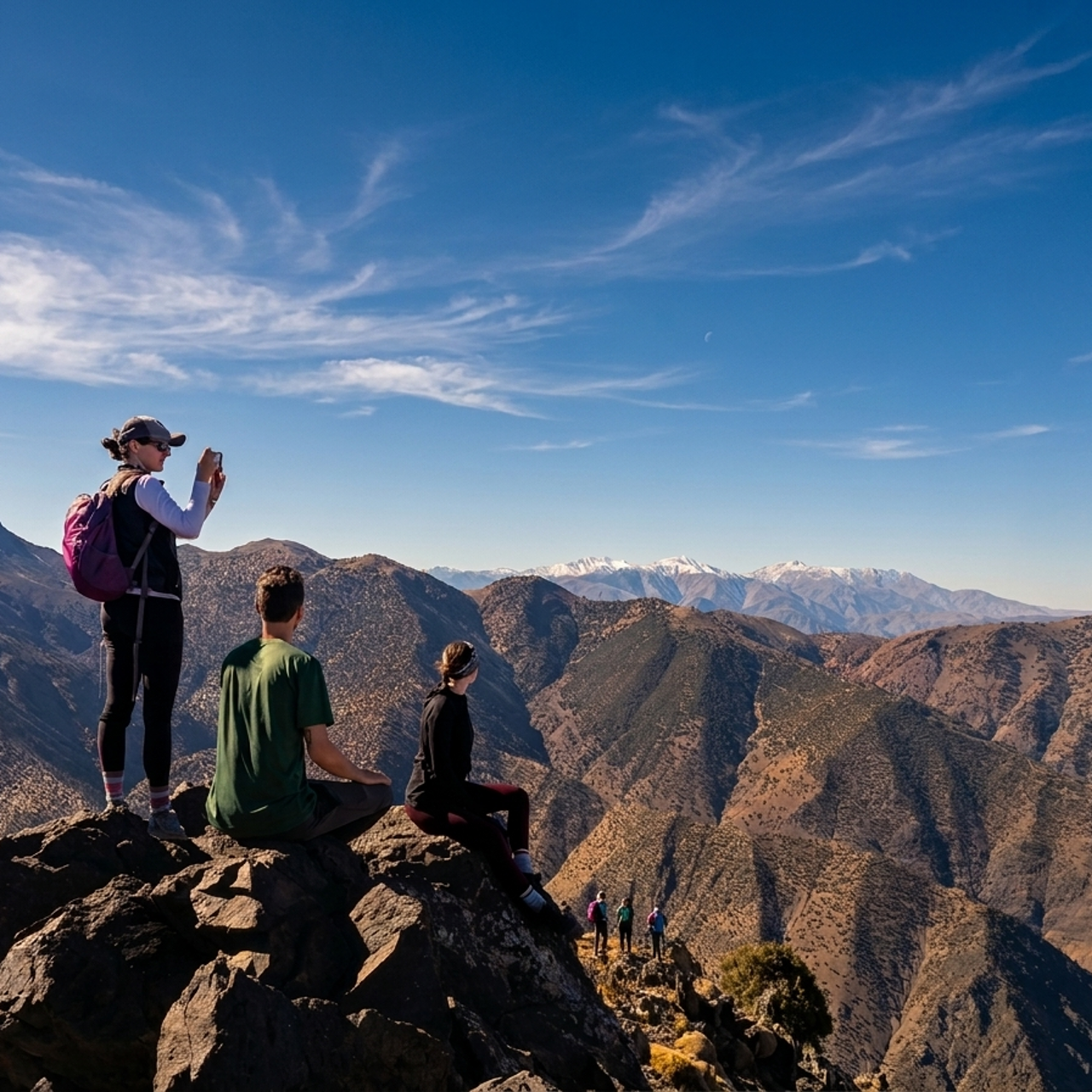
The pass marks the col between the Toubkal massif and neighboring ridges, with layered scree slopes falling away on both sides. Stand near the cairn at the top for a wide shot back down the ascent route travelers cover on a mount toubkal trek 2 days itinerary.
The stone-built mountain hut sits below the summit block with the scree headwall behind it, a classic base-camp composition. Shoot from the flat ground just below the entrance to include the full facade and the peaks beyond.
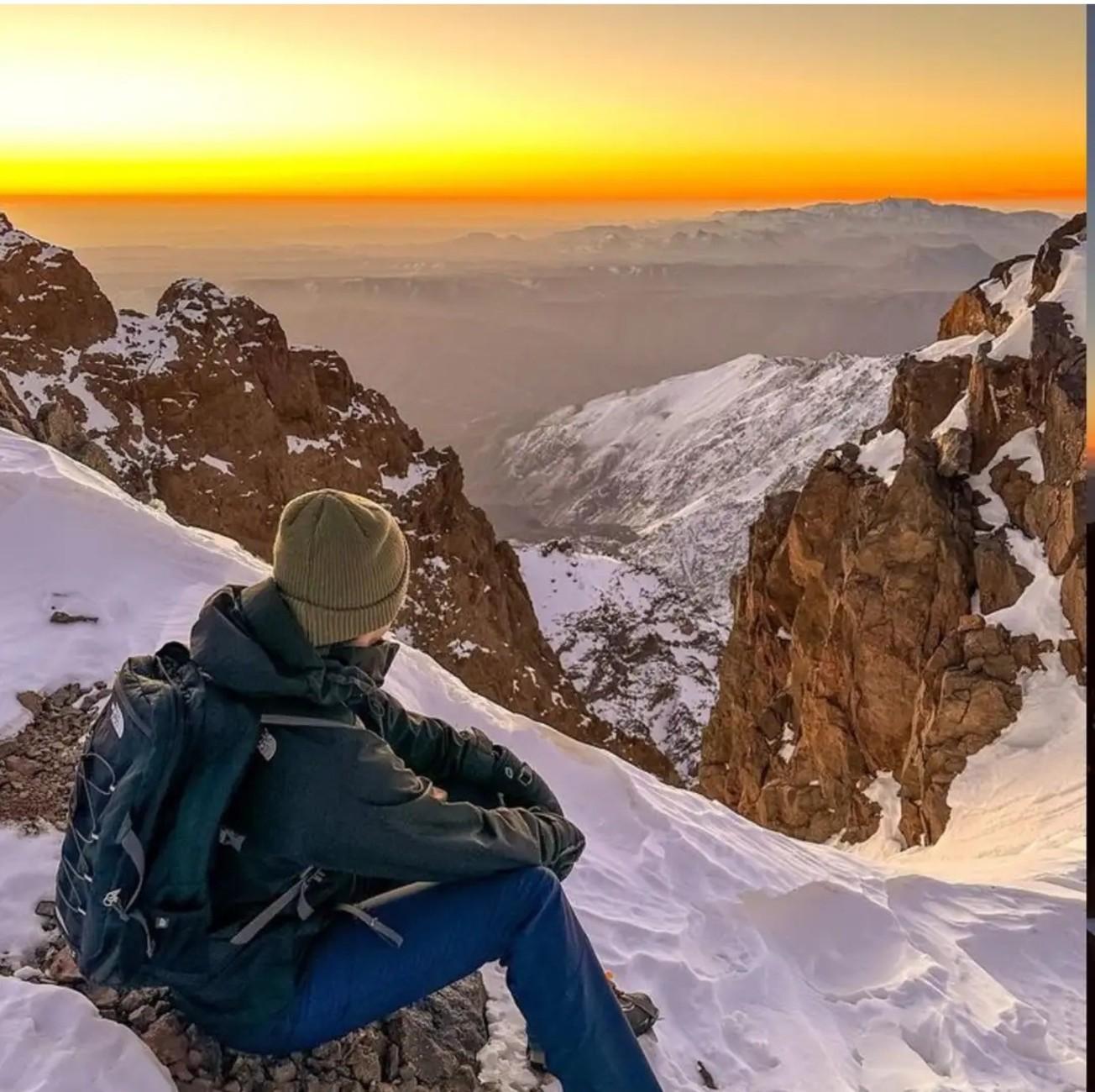
From the 4,167m summit marker, the view opens across the High Atlas range and, on clear days, toward the Sahara edge to the south. The metal pyramid marker is the anchor point most people frame against the sky.
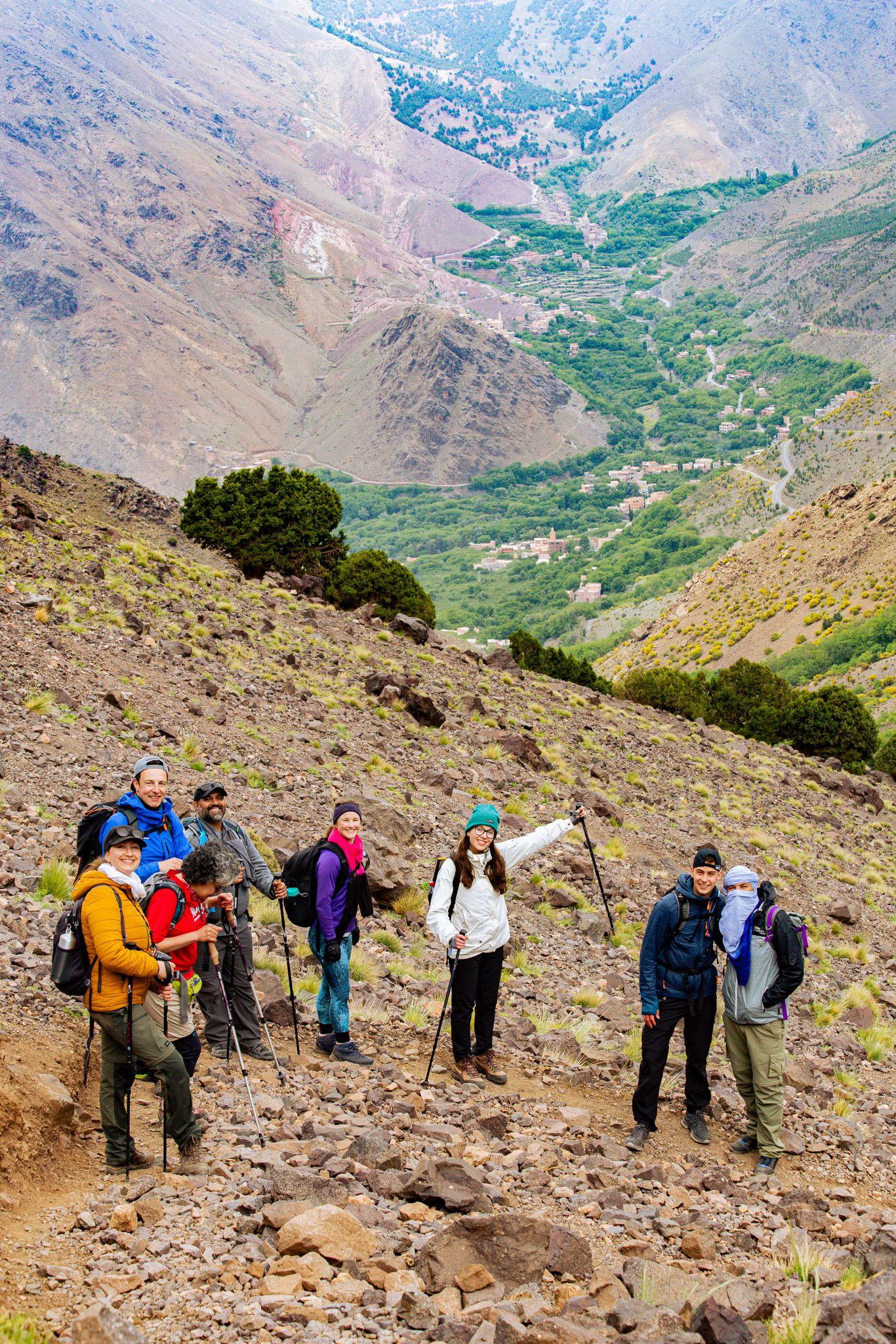
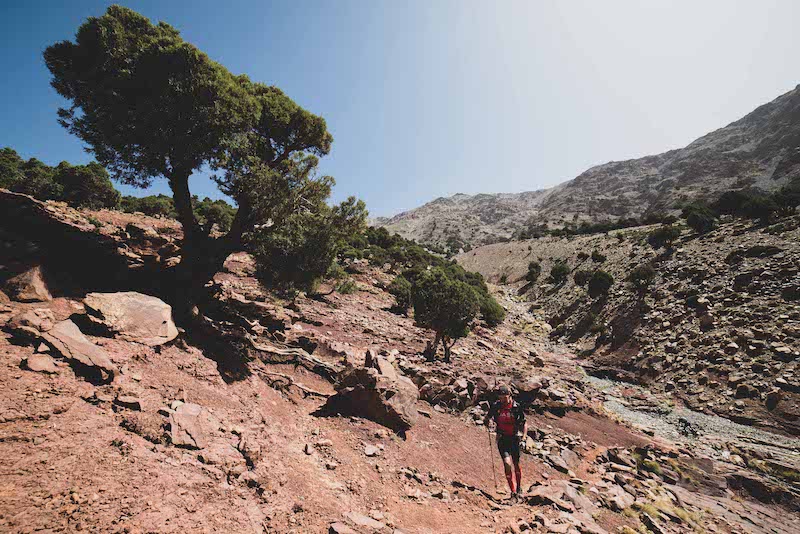
A wide bend on the trail above Imlil gives a sweeping look back down the valley terraces and the Mizane river gorge. Good spot to pause on the walk up before the terrain steepens.
From the upper trail switchbacks just outside Imlil, the flat-roofed Berber village appears stacked against walnut groves and the valley walls. This is the last easy wide-angle shot before the trail narrows.
A mount toubkal trek 2 days itinerary is a real mountaineering undertaking, not a casual family walk, so it suits older kids and teens who already hike rather than toddlers or young children. Families should expect steep, rocky trails, high altitude, and long days on foot, closer to a guided ascent than a park stroll.
Not usable anywhere on this route. The trail to the Toubkal refuge is unpaved mountain terrain with loose rock and steep sections, so kids must be able to walk the full distance themselves.
Guides and trekking operators generally recommend children age 10 and up who have prior hiking experience and are comfortable with multi-hour ascents at altitude. Younger kids can struggle with the thin air above 3,000 meters and the exposed summit push.
There are no baby-change facilities or formal restrooms along the trail itself; the Imlil trailhead and mountain refuges have basic toilets only. A licensed guide is legally required for the whole family, which also means help is on hand if a child struggles partway.
Because a mountain guides tour of Toubkal covers steep elevation gain over two days, build in extra rest stops for kids and treat the early 07:00–10:00 start as fixed rather than flexible. Rushing children on the descent is where most falls happen, so budget slack time.
Pack familiar snacks and electrolyte drinks since options en route are limited to what the refuge kitchen serves. Kids burn calories fast at altitude, so frequent small bites work better than waiting for full meals.
Sudden weather shifts are common in the High Atlas, and there is no indoor fallback on the mountain itself. If conditions turn, the guide will decide whether to shorten the trek or turn back, so families should treat the itinerary as weather-dependent.
Most meals on a mount toubkal trek 2 days itinerary come from two fixed points: Imlil village at the start and the mountain refuge near the summit, with little else in between. Expect simple, hearty Berber cooking rather than menus or choice.
The CAF refuge below the summit serves set communal dinners, usually tajine or soup with bread, to trekkers staying overnight. Tables fill fast once groups arrive off the trail, so early check-in means a calmer meal. It is the only proper hot-food stop on the upper mountain.
This well-known lodge above Imlil has a terrace restaurant serving tagines, salads and mint tea with views over the valley. It gets busy around lunch with day hikers finishing a mount toubkal trek 2 days tour, so mornings are quieter. Good for a proper sit-down meal before or after trekking.
Small cafés around Imlil's main square offer coffee, msemen and omelets for an early breakfast before setting off. They open before dawn to catch trekkers on the 07:00–10:00 start window. Quick, cheap and no reservation needed.
Local shops and stalls sell bread, dried fruit, nuts and snacks useful for trail food since options thin out fast above the village. Best visited the evening before departure to avoid morning queues. Not a sit-down meal, just provisioning.
Tudo o que você precisa saber para sua viagem
Toubkal National Park has no fixed gate hours and is accessible 00:00–23:59 daily, though guided departures for the Mount Toubkal trek 2 days route typically begin between 07:00 and 10:00 to reach the refuge before afternoon heat.
Entry to Toubkal National Park is free at 0 MAD, though a licensed guide is legally required and is included in the cost of a booked tour.
Yes, Moroccan law requires a certified guide from the Bureau des Guides in Imlil for anyone attempting the ascent, which is built into every Mount Toubkal trek 2 days tour.
Layered clothing is essential, including a warm insulated jacket, sturdy waterproof boots, sunglasses, and a hat, since temperatures drop sharply at the Toubkal Refuge and summit.
No, the terrain is a steep, rocky mountain trail unsuitable for wheelchairs or limited mobility, and there are no paved paths on the route to the refuge or summit.
Prohibited items include drones without prior authorization, glass containers, firearms, fireworks, single-use plastic bags, and unauthorized camping outside the refuge.
Summer (June-August) offers the most stable trail conditions, while autumn, the current season, provides clear skies and cooler comfortable temperatures with fewer crowds than peak summer.
Children around age 10 and older who are experienced walkers can join, since the summit day involves 6-7 hours of steep hiking at altitude.
Drive or take a taxi from Marrakech to Asni, then continue to Imlil village, a trip of roughly 1h30 by car where the trailhead for the Mount Toubkal trek 2 days route begins.
Most bookings allow free cancellation up to 48-72 hours before departure with a full refund, since the park's own entrance fee is 0 MAD and only guide and mule costs apply.
Yes, breakfast, dinner, and a packed lunch are typically provided at the Toubkal Refuge as part of the trek package.
Sidi Chamharouch shrine along the trail and the Berber villages of Imlil and Aremd pair well with a High Atlas Mountains itinerary before or after the ascent.
A whitewashed shrine and pilgrimage site built around a large boulder, marking the halfway point between Imlil and the Toubkal Refuge.
A Berber village at roughly 1,740 meters that serves as the gateway to Toubkal National Park, with mule stables and small shops.
A traditional Berber hamlet of stone houses terraced into the hillside above Imlil, often visible from the lower trail.
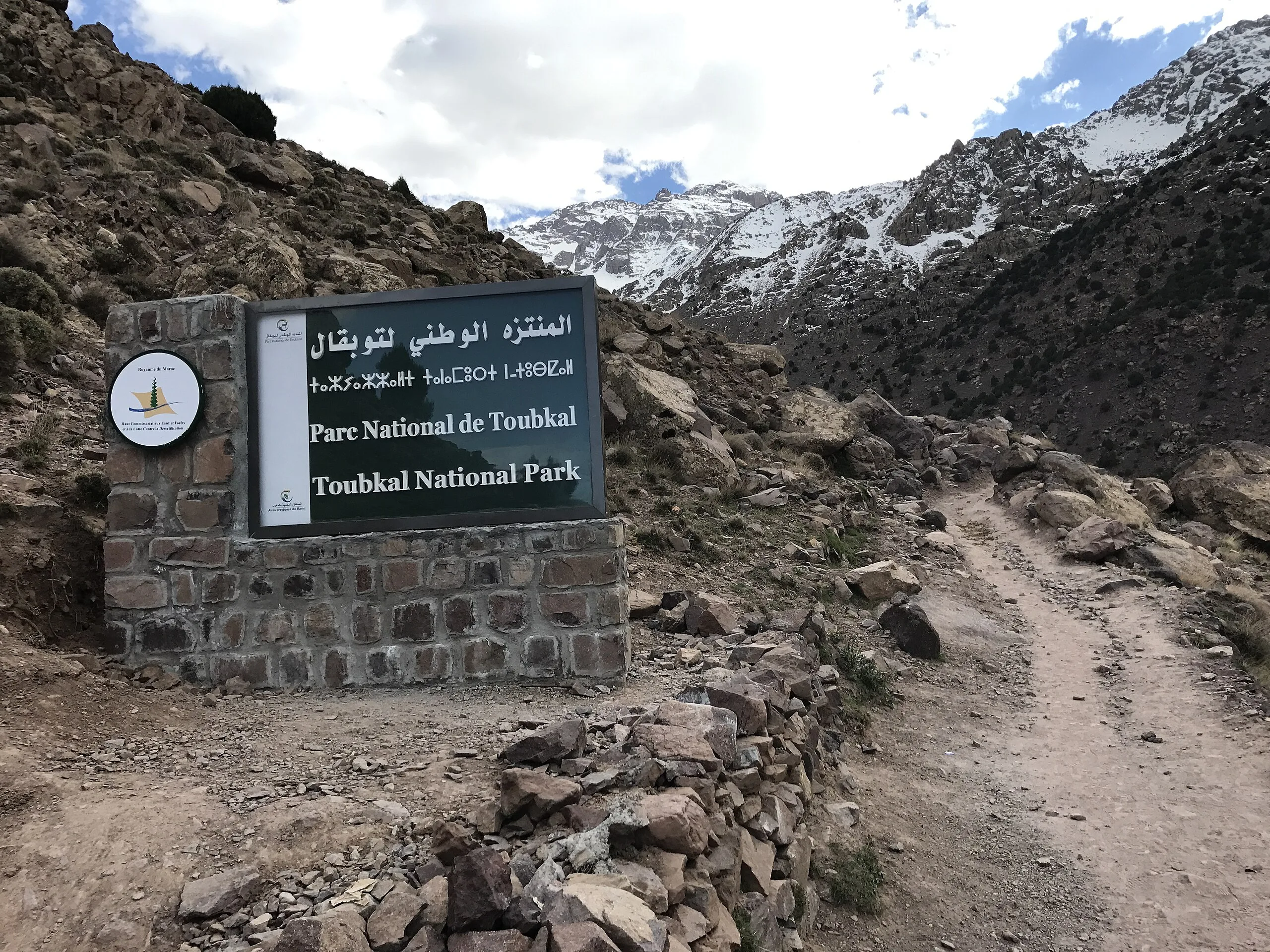
Morocco's high-altitude national park protecting the Toubkal massif and surrounding valleys of the High Atlas.
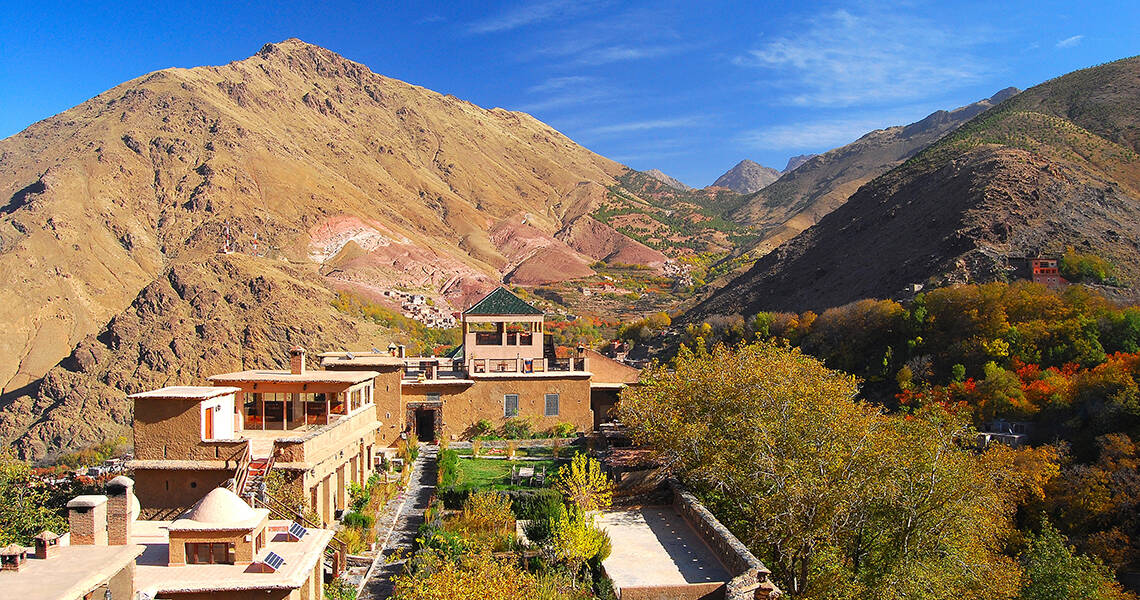
A restored kasbah-style guesthouse near Imlil with mountain views, popular as a pre-trek base.
A small riad offering rooms close to the Bureau des Guides for early departures.
The dormitory-style mountain hut at 3,207 meters used as the overnight stop before the summit day.
Wide range of riads and hotels for travelers basing themselves in Marrakech before or after the trek.
Simple guesthouses in Asni offering a lower-cost overnight option en route to Imlil.
Junte-se a milhares de viajantes felizes que descobriram esta experiência incrível
Reserve sua experiência agora