
48 hr
2-Day Mount Toubkal Summit Trek with Meals
- Expert local guide
- Small group
- Skip-the-line access
- Free cancellation
Mount Toubkal Guided Trek — Summit North Africa's Highest Peak
Licensed mountain guides lead the ascent, two days from Imlil to 4,167 metres
Compare fares, pick the fit — all bookings are mobile-voucher and eligible for free cancellation where shown.
48 hr
48 hr
48 hr
| Experience | Duration | Rating | Skip-the-line | Guide | Small group | Free cancel. | Price | |
|---|---|---|---|---|---|---|---|---|
|
Guided Experience
Most popular
2-Day Mount Toubkal Summit Trek with Meals
|
48 hr | ★ 4.7 | ✓ | ✓ | ✓ | ✓ | €93 | Book → |
|
Guided Experience
2-Day Mount Toubkal Summit Trek from Marrakech
|
48 hr | ★ 4.7 | ✓ | ✓ | ✓ | ✓ | €105 | Book → |
|
Guided Experience
2-Day Mount Toubkal Summit Trek
|
48 hr | ★ 4.6 | ✓ | ✓ | ✓ | ✓ | €105 | Book → |
Worth it for trekkers seeking North African altitude
A mount toubkal guided trek costs roughly 1,200–1,800 MAD per person for two days when booking through reputable Imlil operators, covering a licensed guide, mule transport for gear, refuge bed, and meals. Add 200–400 MAD for porter tips and potential gear rental if you lack crampons or winter boots. The Toubkal National Park permit is included in most packages. For that outlay, you reach the 4,167-meter summit—North Africa's highest point—cross high-altitude passes, and navigate scree slopes that demand route-finding experience most casual hikers lack. The guide requirement is legal and practical: weather shifts fast above 3,200 meters, and the final ascent involves loose rock where a misstep ends badly. Solo attempts risk fines and genuine danger. If you want the summit certificate and alpine exposure without the logistics headache, the guided option delivers clear value. If you resent mandatory guides or prefer spontaneous pacing, the cost-to-freedom ratio feels steep.
Bottom line: The guided structure turns a committing alpine objective into a manageable weekend ascent—worth the spend if you value the summit over solo flexibility.
They complement each other; most visitors who do both call the Jebel Sirwa Trek the more wild, off-the-beaten-path experience compared to the iconic mount toubkal guided trek.
|
Top pick Mount Toubkal |
Jebel Sirwa | |
|---|---|---|
| Summit altitude | 4,167 m | 3,305 m |
| Technical difficulty | Non-technical (summer) | Challenging/Tough |
| Trail crowds | Moderate | Low/Remote |
| Scenery variety | High mountain/Scree | Volcanic/Plateau/Gorges |
| Guide/permit requirements | Licensed guide mandatory | Licensed guide recommended |
| Typical trip length | 2–6 days | 5–8 days |
| Best season | April–October | April–November |
| See tickets & prices |
Verdict: Choose the mount toubkal guided trek tour for a legendary high-altitude achievement, or opt for the rugged Jebel Sirwa trek to enjoy true solitude and volcanic landscapes with fewer mount toubkal guided trek tickets required for park access.
Hand-picked experiences loved by thousands of travelers
3 days
Free Cancellation
Conquer North Africa's highest peak on this guided mountain adventure through the High Atlas
2 days
Free Cancellation
Conquer North Africa's highest peak on a challenging two-day mountain adventure through the Atlas range
2 days
Free Cancellation
Scale North Africa's highest peak on a guided mountain adventure through Berber villages and alpine terrain
2 days
Free Cancellation
Conquer North Africa's highest peak on a two-day guided adventure through the High Atlas Mountains
2 days
Free Cancellation
Trek through breathtaking mountain valleys, cross scenic passes, and experience authentic Berber hospitality
4 days
Free Cancellation
Conquer North Africa's highest peak with guided acclimatization through Atlas Mountain valleys
2 days
Free Cancellation
Scale North Africa's tallest mountain on a two-day guided adventure through Berber villages and alpine terrain
2 days
Free Cancellation
Conquer North Africa's tallest mountain on a guided two-day expedition through Atlas peaks and valleys
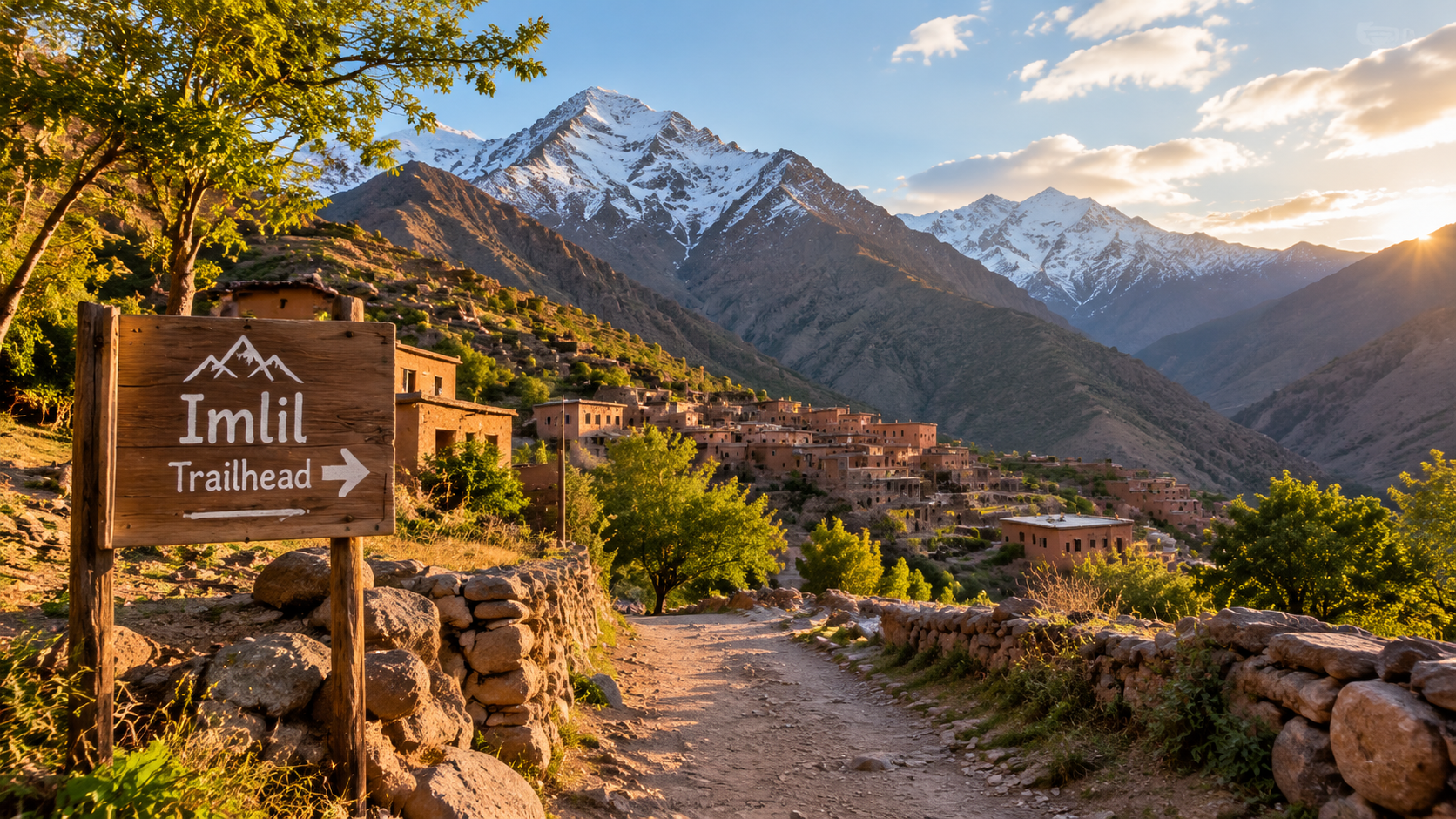
Begin your ascent in the Berber village of Imlil.
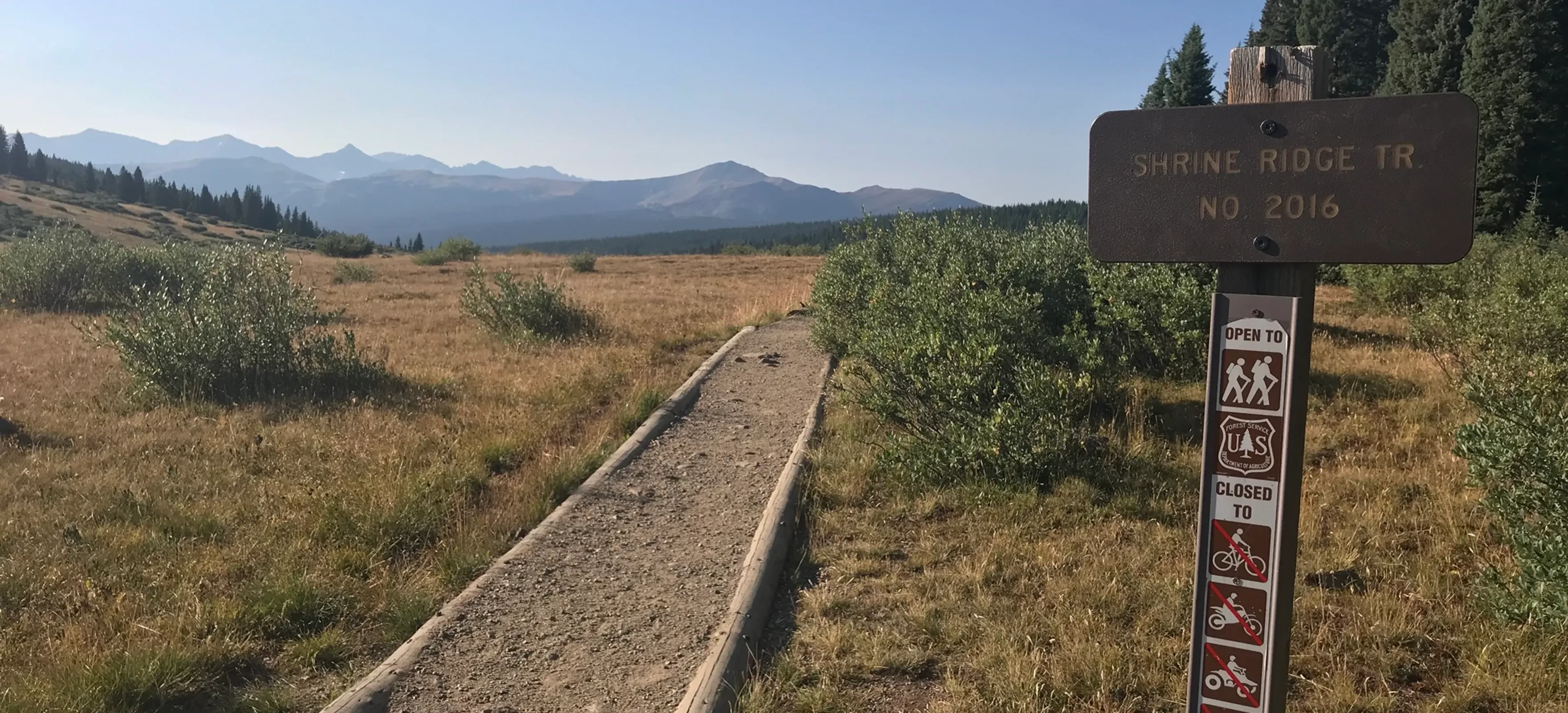
Pass the local shrine before climbing toward the refuge.
Stay at 3,207 meters to acclimatize for the summit push.
Reach the 4,167-meter peak for panoramic mountain views.
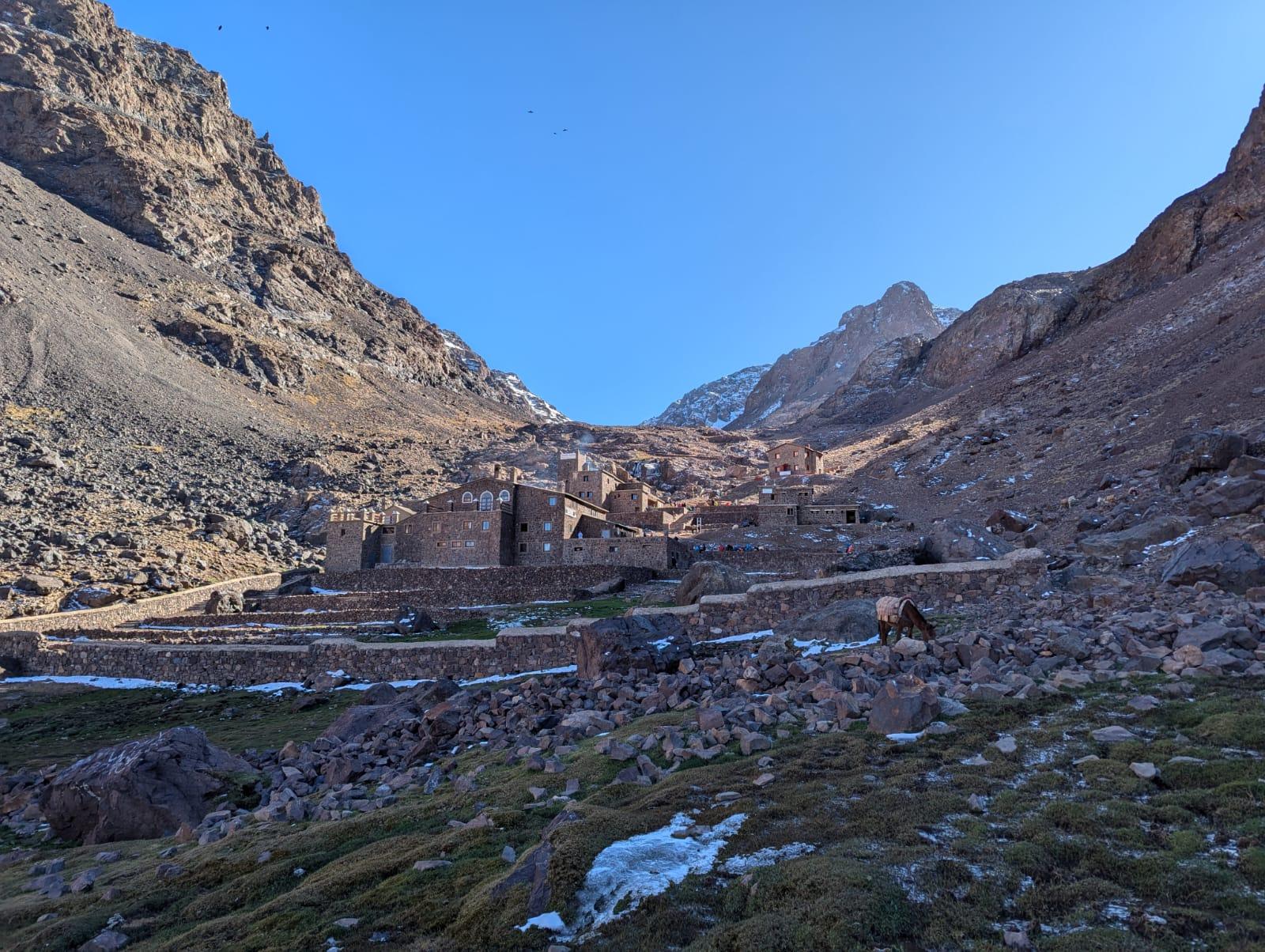
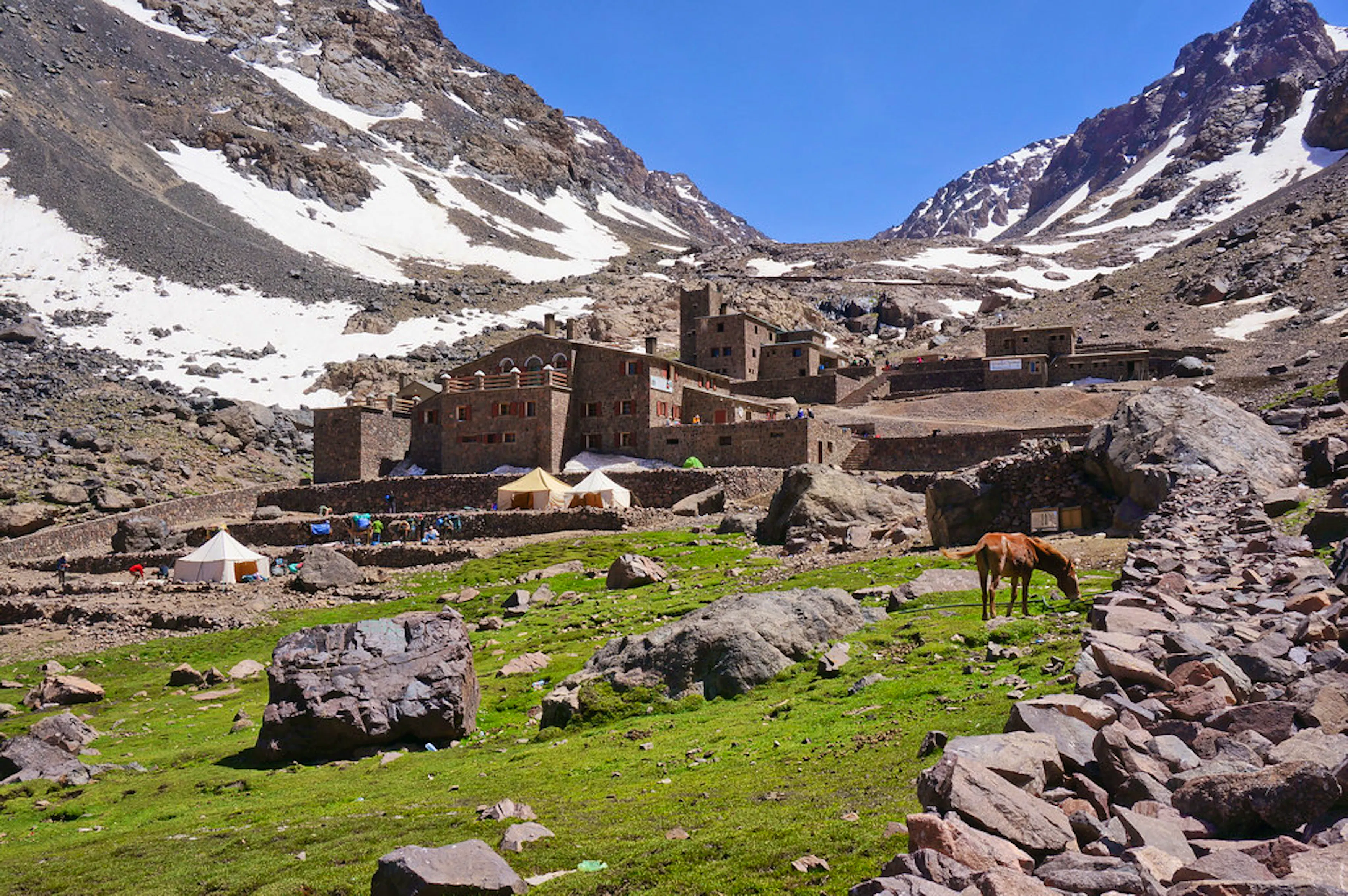
This base camp at 3,207 meters is the crucial stop for acclimatization before the final ascent.
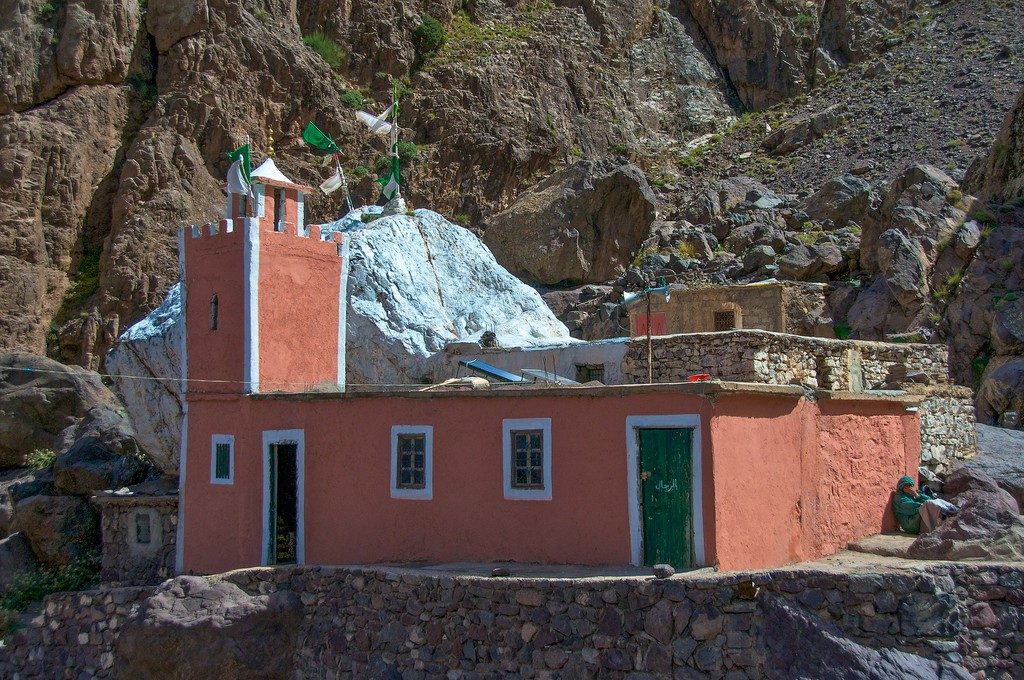
This shrine is a well-known local landmark where the trail officially leads into the upper mountain zone.
At 4,167 meters, this ridge offers the highest vantage point in North Africa with expansive panoramic views.
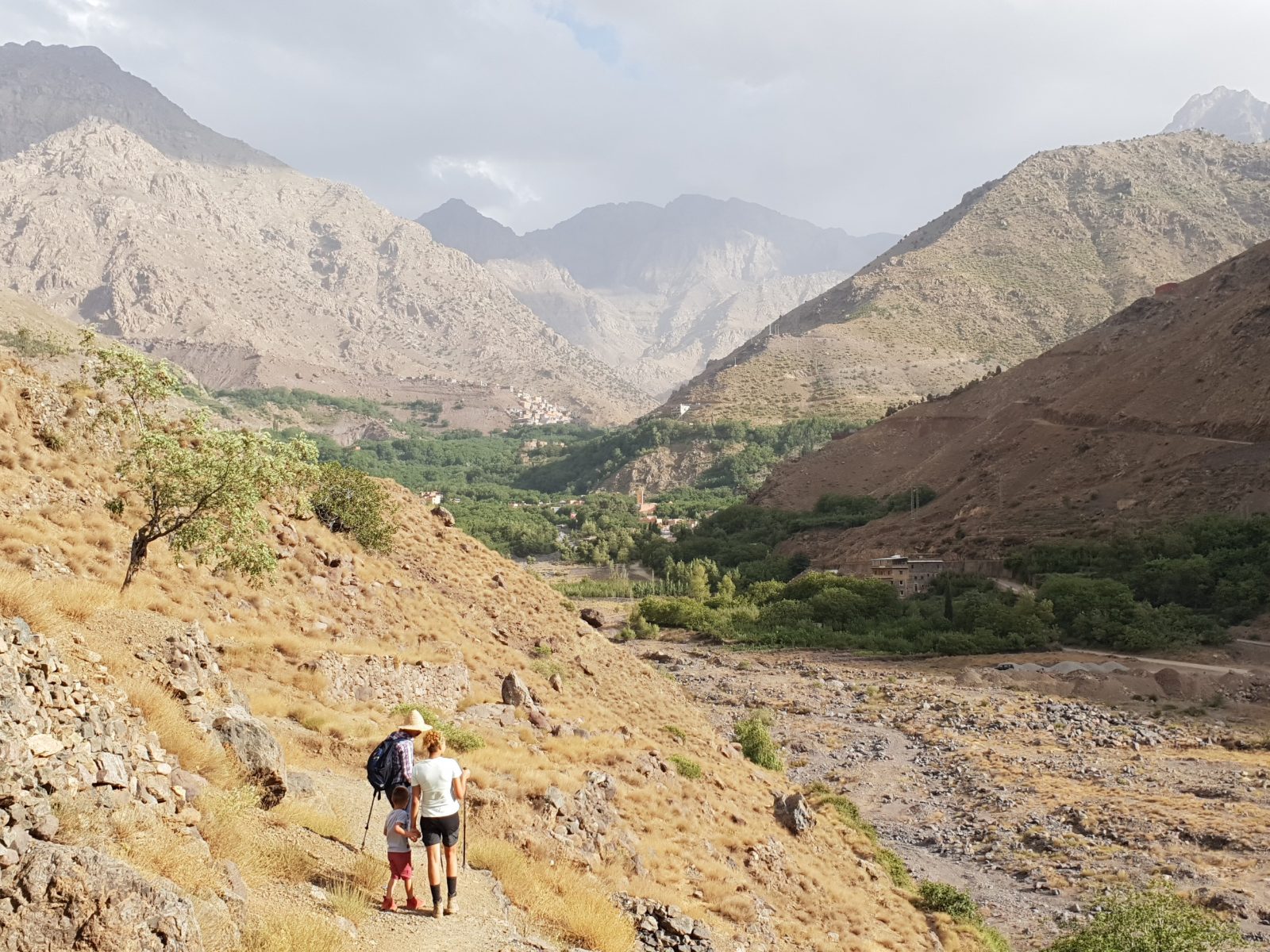
The starting point of the trek, known for its terraced walnut groves and traditional Berber community.
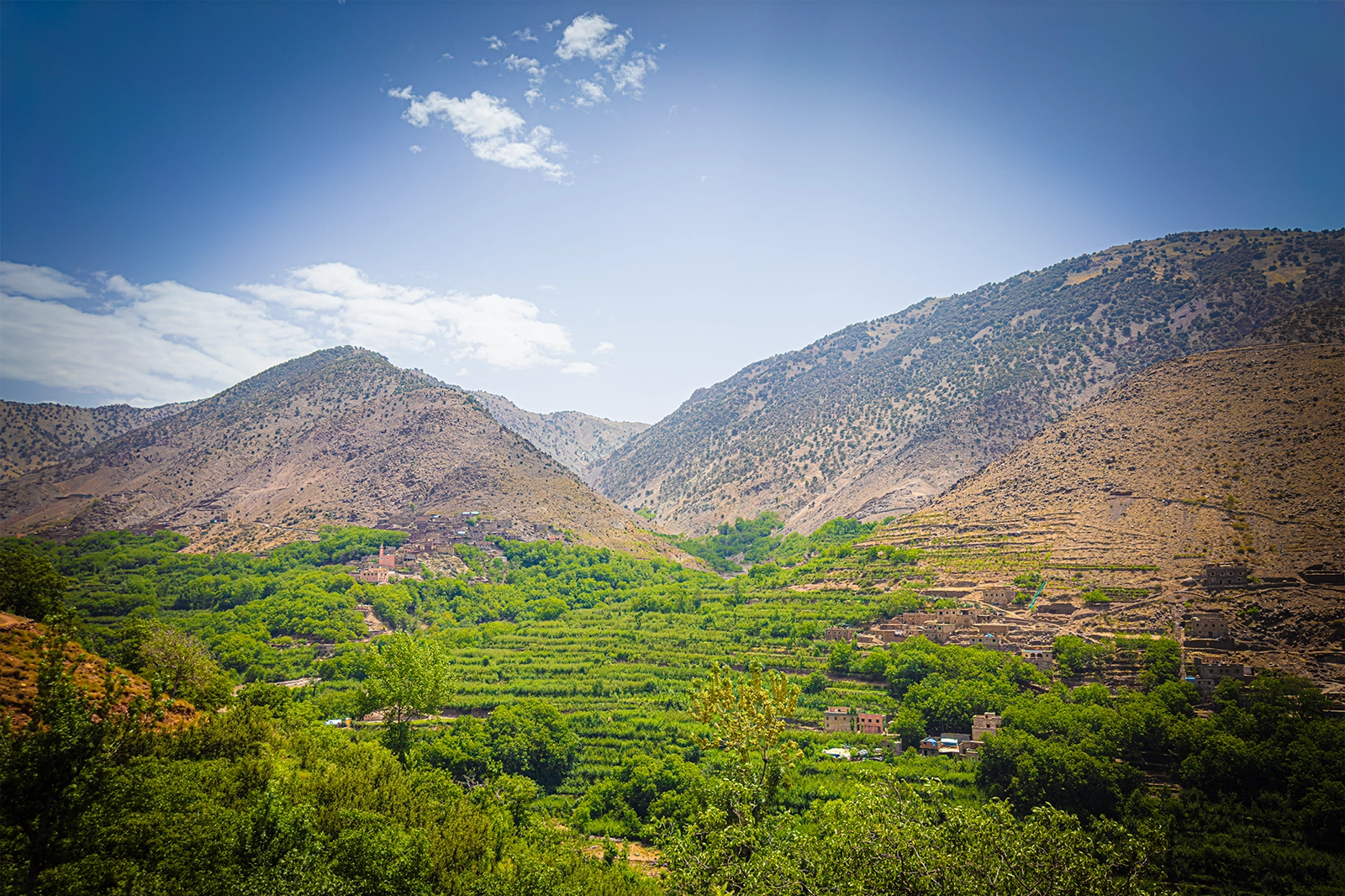
The route passes through this valley, which features significant biological richness and traditional mountain farming.
You leave Imlil before the sun clears the ridgeline, your guide setting a deliberate pace as the trail climbs through terraced barley fields and crosses a stone bridge over the Mizane River.
Mule teams pass carrying provisions to the refuge, their handlers calling greetings in Tashelhit as you ascend into juniper scrub. By midday you reach Sidi Chamharouch, a whitewashed shrine where pilgrims leave offerings, and the valley narrows into a boulder field.
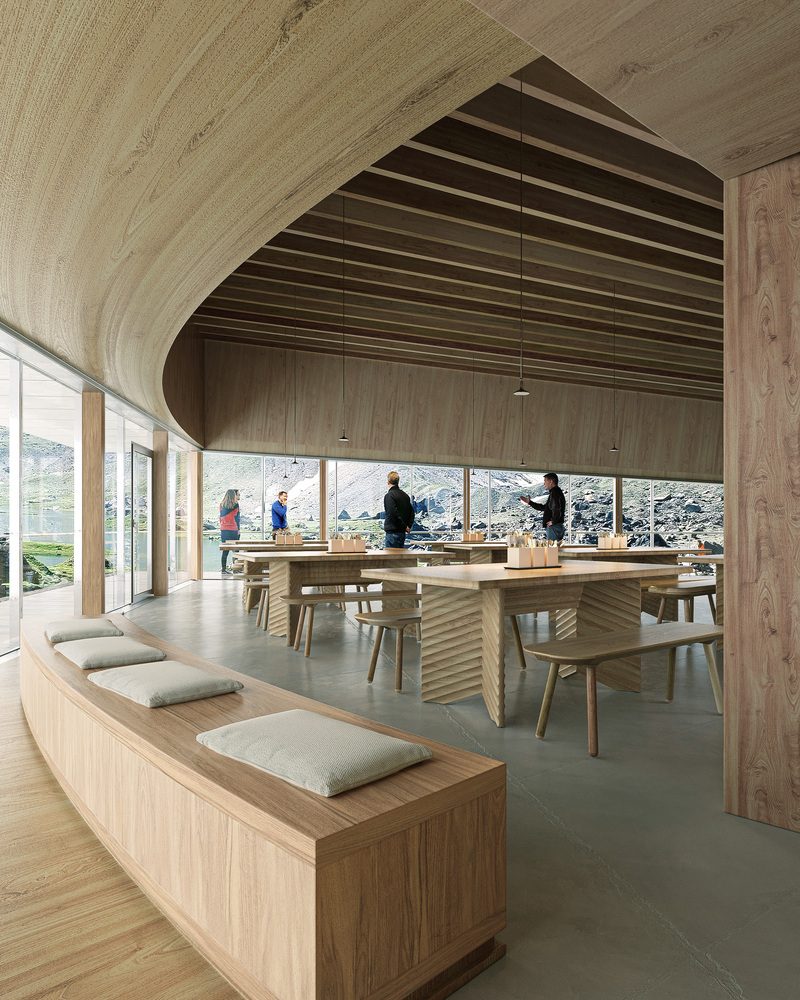
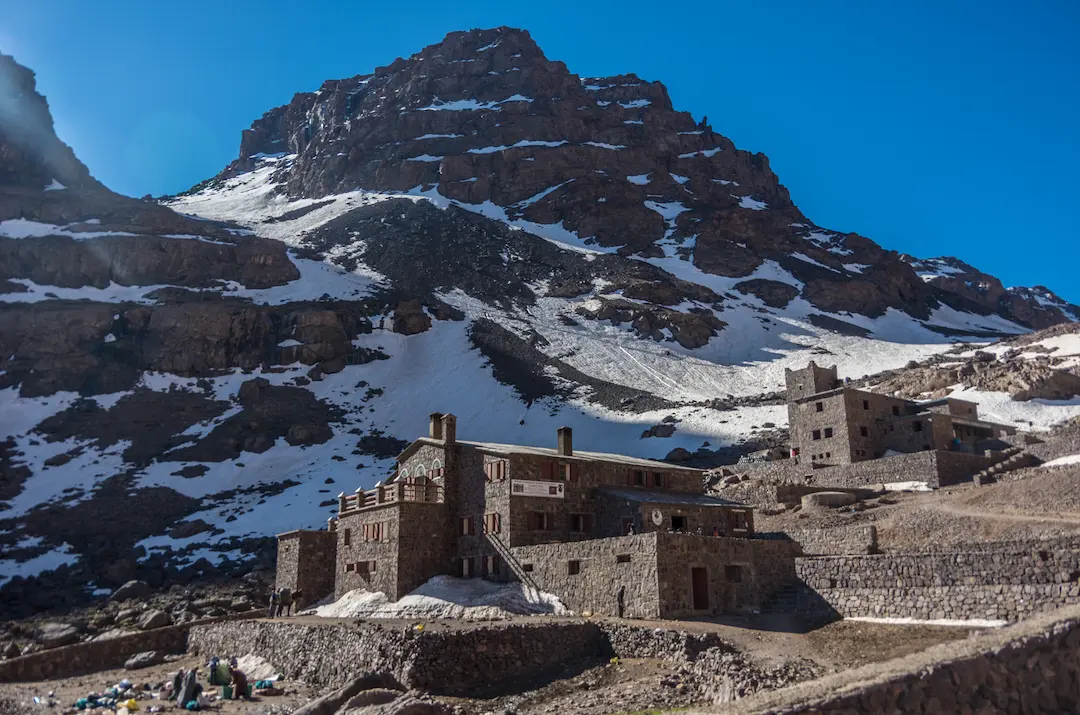
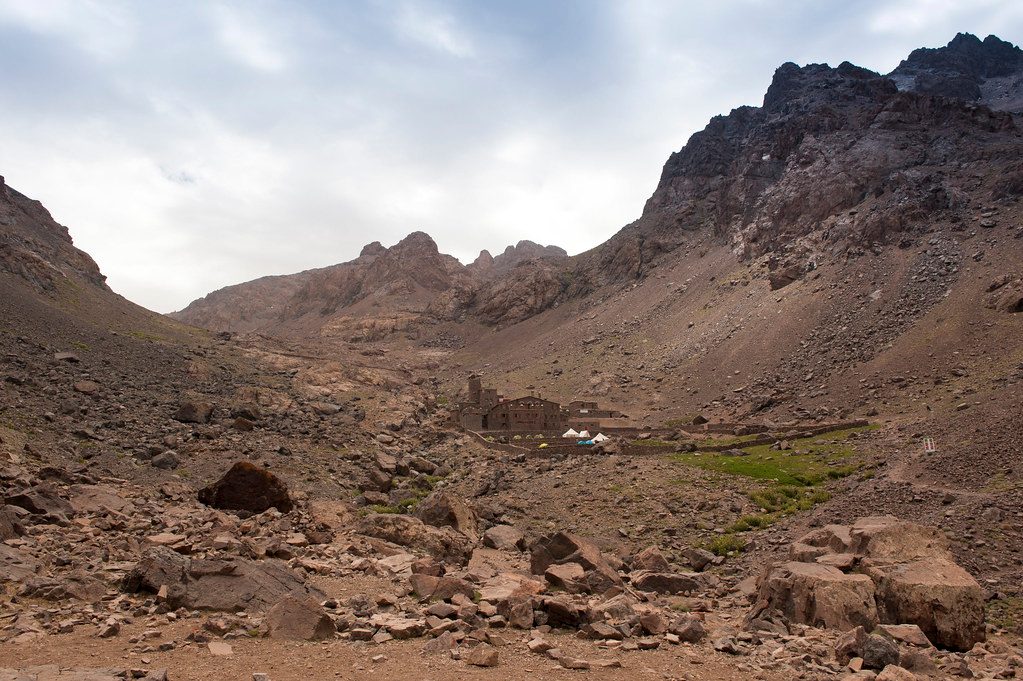
The refuge appears at 3,207 metres, a low concrete structure perched on a moraine shelf with the summit pyramid looming directly above. You arrive by 15:00, claim a bunk, and watch afternoon clouds build over the western peaks. Dinner is served communal-style at long tables, and you retire early as other trekkers compare route conditions in a half-dozen languages.
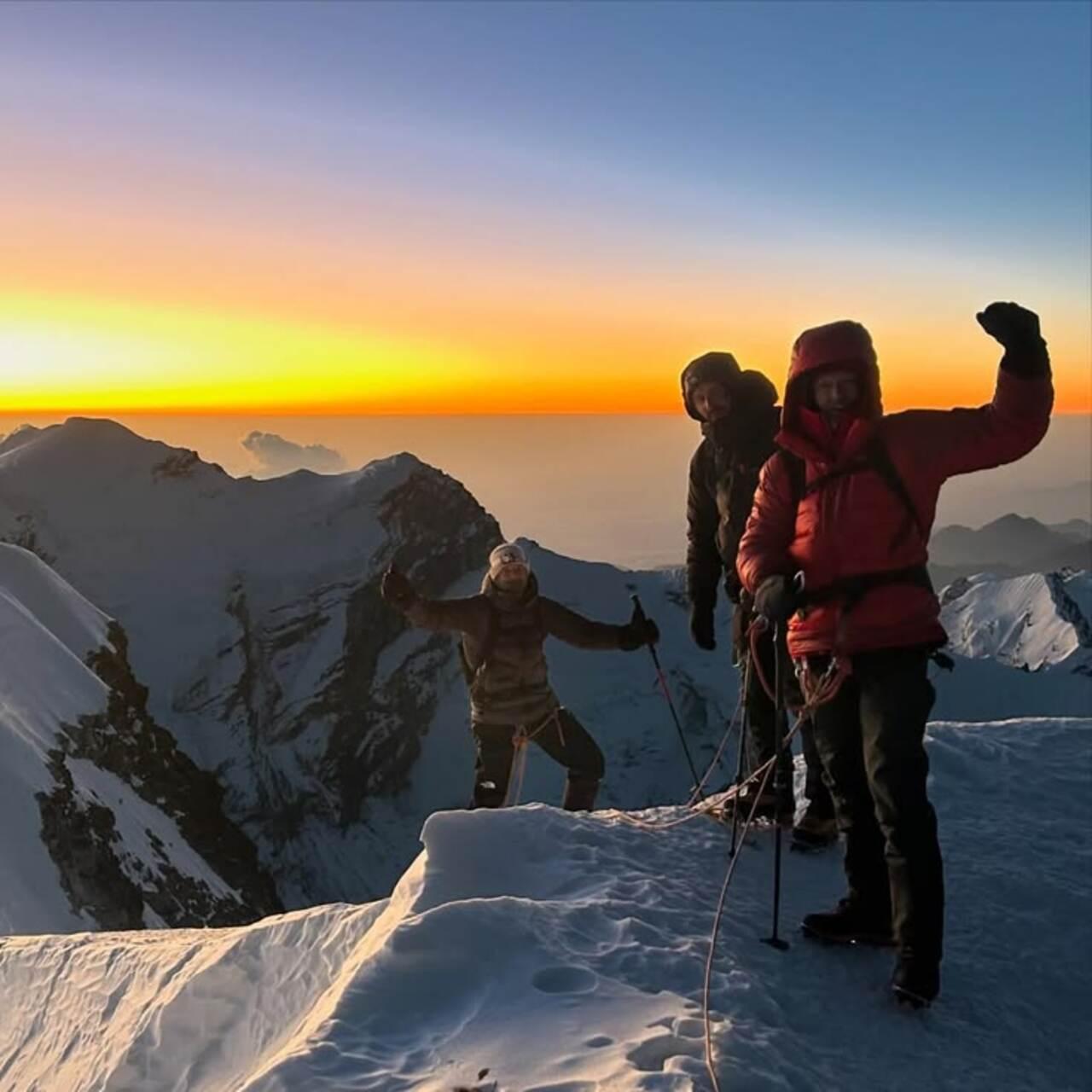
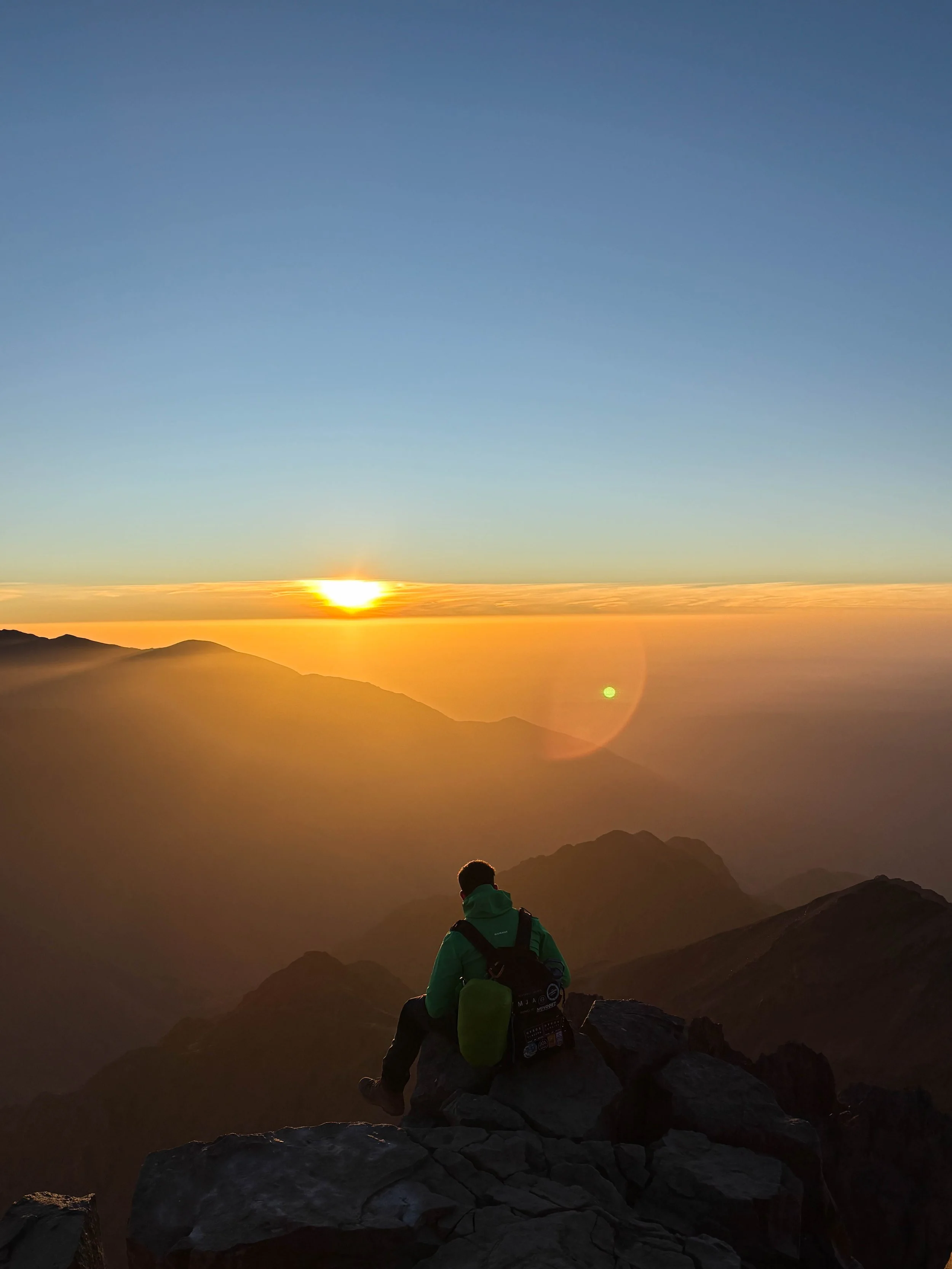
Pre-dawn starts with mint tea and bread. You clip a headlamp to your pack and follow your guide's steady rhythm up switchbacks barely visible in the dark. Scree gives way to fixed rock as altitude thins the air. The sun breaks over the Anti-Atlas as you reach the summit cairn at 07:30, the Sahara a rust-coloured band stretching south beyond the last ridge. You sign the logbook, photograph the bronze survey marker, and begin the descent before clouds obscure the trail.
All the details about your upcoming adventure in one place
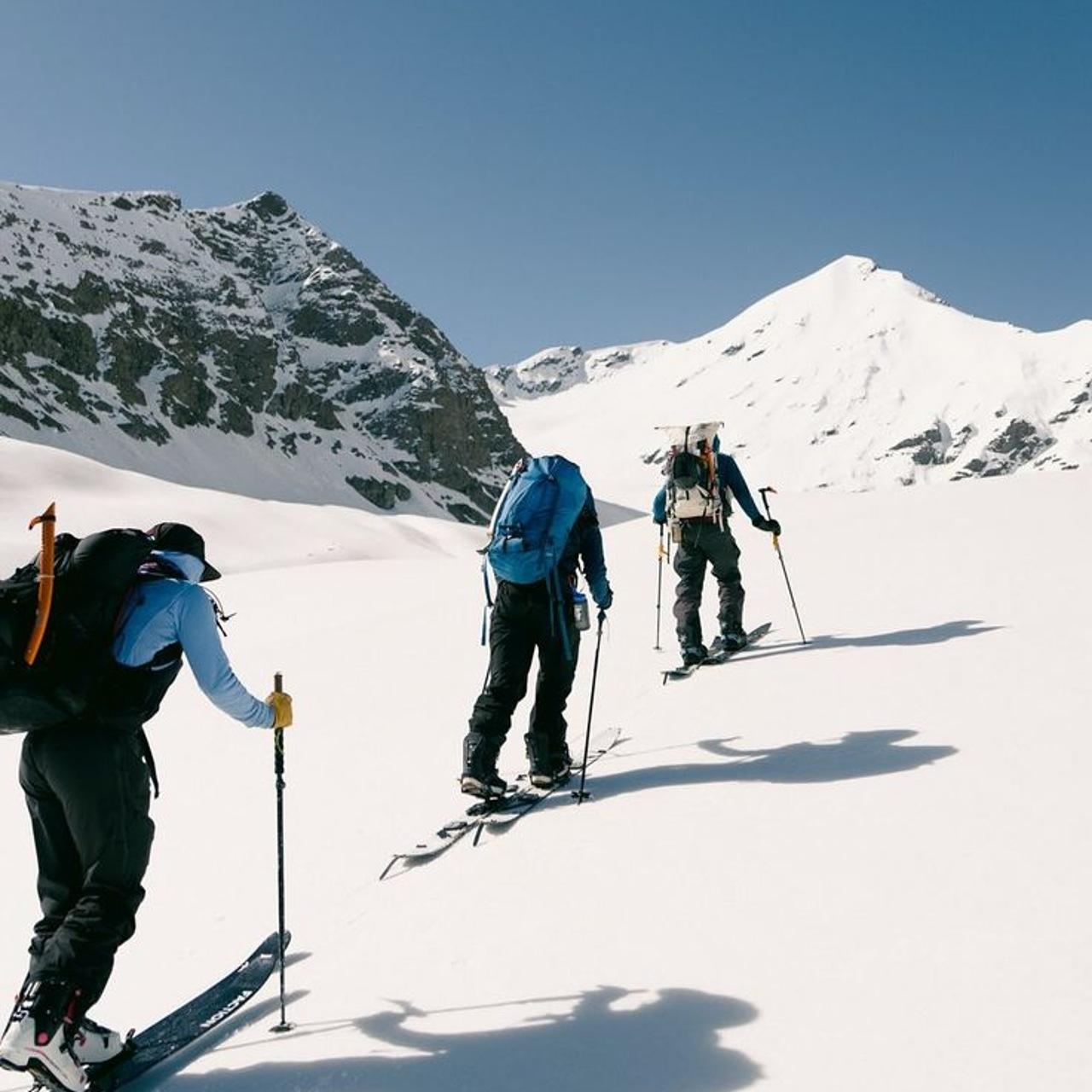
A mount toubkal guided trek takes you to North Africa's highest summit at 4,167 meters through Berber villages and alpine terrain in the High Atlas range. Local mountain guides lead mount toubkal guided trek tours from Imlil base, navigating rocky ridges and seasonal snow fields to the peak. Most ascents include a night at Toubkal Refuge before the summit push at dawn.
At 4,167 metres, Jebel Toubkal stands as the tallest summit in North Africa, a fact that remained largely unknown to European cartographers until French surveyors mapped the High Atlas in 1923.
The mountain rises from the village of Imlil in Morocco's Al Haouz Province, a settlement that served Berber shepherds for centuries before becoming the primary trailhead for summit attempts. Toubkal National Park, established in 1942 to protect the region's endemic flora and fragile alpine ecosystems, now encompasses 380 square kilometres of rugged terrain where Barbary sheep still traverse scree slopes and golden eagles nest on inaccessible cliff faces.
Moroccan law requires all climbers to obtain a park permit and ascend with a licensed mountain guide, a regulation born from rescue statistics in the 1990s when unsupported attempts resulted in frequent injuries above the snowline. The standard two-day route begins in Imlil at 1,740 metres, follows the Mizane Valley past walnut groves and terraced fields, and reaches the stone refuge at Toubkal Basecamp by afternoon. Most parties depart for the summit push between 05:00 and 06:00, navigating a loose scree path that gains 900 vertical metres before the final rocky scramble to the pyramid cairn. From April through October, the ascent is largely snow-free and requires no technical climbing equipment, though winter conditions transform the upper mountain into a serious alpine objective demanding crampons and ice axes.
The view from the summit platform stretches across the entire Atlas range, with the Sahara's northern edge visible on clear days as a haze-blurred line eighty kilometres south. Berber guides from Imlil maintain an oral tradition of route knowledge passed across generations, recognizing weather patterns by cloud formations over the Tazaghart massif and adjusting turnaround times based on afternoon wind strength. The trek's popularity has grown steadily since Morocco opened to independent tourism in the 1970s, yet the mountain retains its character as a genuine high-altitude challenge rather than a groomed tourist climb. Park regulations mandate that all waste be carried down, and the refuge system operates on a minimal-impact model that forbids permanent structures above 3,200 metres.
At 4,167 metres, Jebel Toubkal stands as the tallest summit in North Africa, a fact that remained largely unknown to European cartographers until French surveyors mapped the High Atlas in 1923.
Dress in layers suitable for high-altitude mountain environments, as temperatures can drop significantly near the summit. Sturdy, broken-in hiking boots are essential for the rocky, scree-heavy terrain of a mount toubkal guided trek.
Local authorities and the Gendarmerie Royale conduct check-points along the route to verify identification and the presence of a licensed guide. Keep your passport and permit documentation accessible throughout your mount toubkal guided trek.
Photography is permitted throughout the national park, but ensure you respect local privacy when photographing residents in the mountain villages. Always prioritize your safety over capturing photos on the steep final summit push of a mount toubkal guided trek.
The mount toubkal guided trek is recommended for active families with older children who have previous mountain trekking experience. Younger children may find the 2,400-meter elevation gain and rugged paths of this landmark very challenging.
The trek to Mount Toubkal is a high-altitude expedition that requires a good level of physical fitness and acclimatization. It is not suitable for those with limited mobility or severe altitude sensitivity.
Carry adequate water supplies and high-energy snacks for your mount toubkal guided trek. Most organized tours include meal plans prepared by local cooks at the refuge.
Opening hours
00:00–23:59
Address
Toubkal National Park, Imlil, Al Haouz Province, Marrakech-Safi, Morocco
Entry requirement
Licensed guide and Toubkal National Park permit required
Best arrival window
06:00–08:00
Porter service
Available for gear and equipment
Official site
https://www.eauxetforets.gov.ma
Car · 90 min · Varies by provider
Private transfers from Marrakech take approximately 90 minutes to reach Imlil.
Taxi · 1.5 h · 40 MAD
Grand taxis operate from Marrakech directly to Imlil.
Review specific terms with your licensed guide or tour operator at the time of booking. Deposits are generally required to secure your mount toubkal guided trek and may be subject to non-refundable conditions.
Recommended time
2 days
A mount toubkal guided trek typically spans two days to allow for proper acclimatization at the base camp refuge. Following the best arrival window of 06:00–08:00 ensures you avoid the afternoon heat and potential clouds on the final ascent. This mount toubkal guided trek tour structure is standard, as mountaineers aim to reach the high-altitude summit ridge early when the path remains quiet. Travelers booking mount toubkal guided trek tickets should anticipate a strenuous pace that balances energy conservation with the logistics of navigating Toubkal National Park.
Crowd levels through the day
Weather · crowds · average price — dots go green to amber to red as each metric rises.
April–May offers mild weather and stable conditions for trekkers.
June–August is dry but requires an early start to avoid midday heat.
September–October provides the most consistent weather and clear mountain vistas.
January–February is best for experienced climbers with crampon and ice axe skills.
Spend extra time in Imlil or at the refuge to adjust to the altitude before pushing for the summit.
Begin your summit day before dawn to ensure you reach the peak before afternoon clouds build.
Break in your hiking boots well before the trek to avoid blisters on the long descent.
Use high-factor sunscreen and sunglasses, as UV exposure is intense at 4,167 meters.
Dress modestly in the villages and respect local Berber customs during your visit.
Drink water consistently to combat the effects of thin air at high altitude.
Imlil, Al Haouz Province
Primary assembly point for your mount toubkal guided trek.
Get directionsMount Toubkal's recorded climbing history begins with the Marquis de Segonzac, who led the first documented European ascent in June 1923, accompanied by Vincent Berger and Hubert Dolbeau. The expedition relied on local Berber guides from Imlil and Armed, initiating a pattern of mountain partnership that endures today. Long before European mountaineers arrived, the Amazigh communities of the High Atlas recognized Toubkal as a sacred summit within their seasonal transhumance routes, though written accounts from these centuries remain sparse. The mountain's Berber name, Tubqal, references the prominence that dominates the western Maghreb skyline. Toubkal National Park was formally established in 1942 under French protectorate administration, protecting 38,000 hectares of alpine terrain and cedar forest. The park designation regulated access and laid groundwork for organized mount toubkal guided trek operations. Independence in 1956 transferred management to Moroccan authorities, and the Haut Atlas Occidental Biological Reserve expanded protections in 1994. During the 1970s and 1980s, a handful of European trekking companies began offering structured ascents, training Berber guides from surrounding villages to lead clients safely to the 4,167-meter summit. The Toubkal refuge, a stone hut at 3,207 meters, opened in 1938 and was rebuilt in expanded form in 1999 by the Club Alpin Français, providing climbers a staging point for summit attempts. Guide licensing standards formalized in the early 2000s, requiring certification through the Moroccan mountain guide federation. Today, mount toubkal guided trek tours operate year-round, with winter ascents demanding crampons and ice axes. The trail network now sees over 40,000 trekkers annually, supported by mule handlers and refuge wardens whose families have worked these slopes for generations. Erosion from heavy foot traffic prompted trail reinforcement projects in 2018, balancing tourism revenue with conservation imperatives in North Africa's highest range.
Amazigh herders use Toubkal slopes for seasonal pasture, viewing the summit as a sacred boundary.
Marquis de Segonzac completes the first recorded European ascent with Berber guides from Imlil.
The original Toubkal refuge opens at 3,207 meters, offering shelter for climbers.
Toubkal National Park is established under French protectorate rule, protecting 38,000 hectares.
Morocco gains independence, and park management transfers to national authorities.
Club Alpin Français rebuilds the Toubkal refuge with expanded capacity for trekkers.
Formal guide licensing standards are introduced through the Moroccan mountain guide federation.
Trail reinforcement projects address erosion from increasing trekker numbers exceeding 40,000 annually.
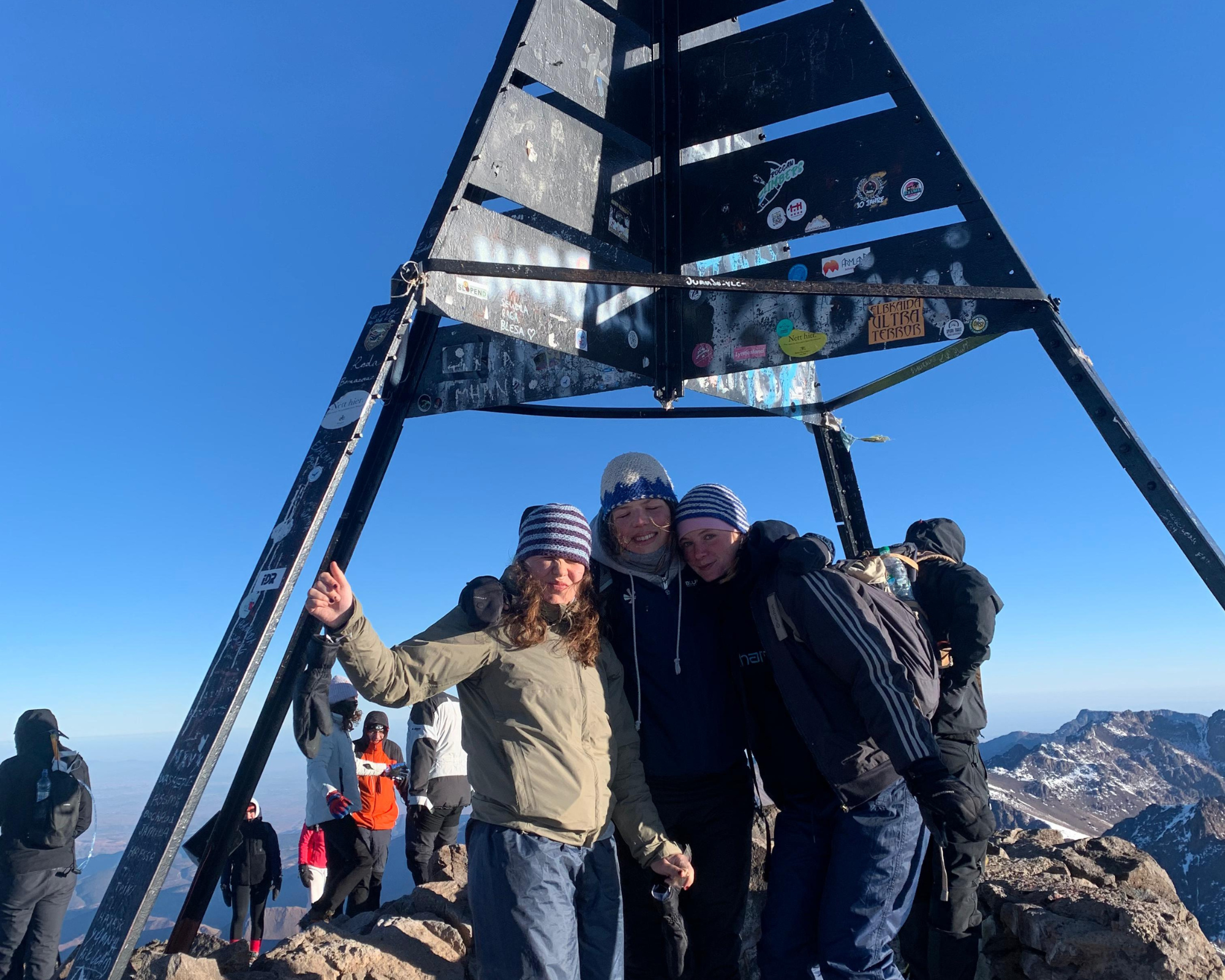
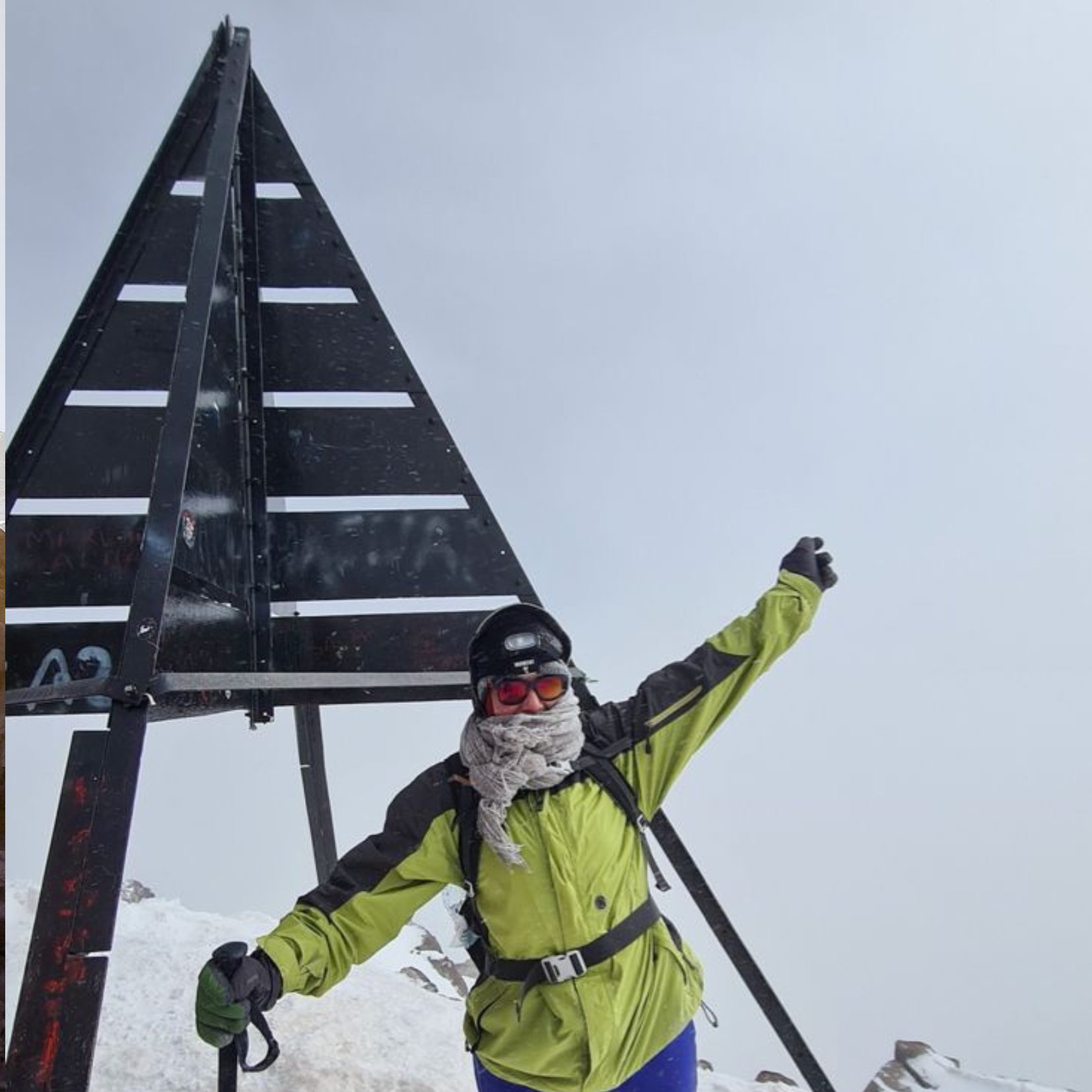
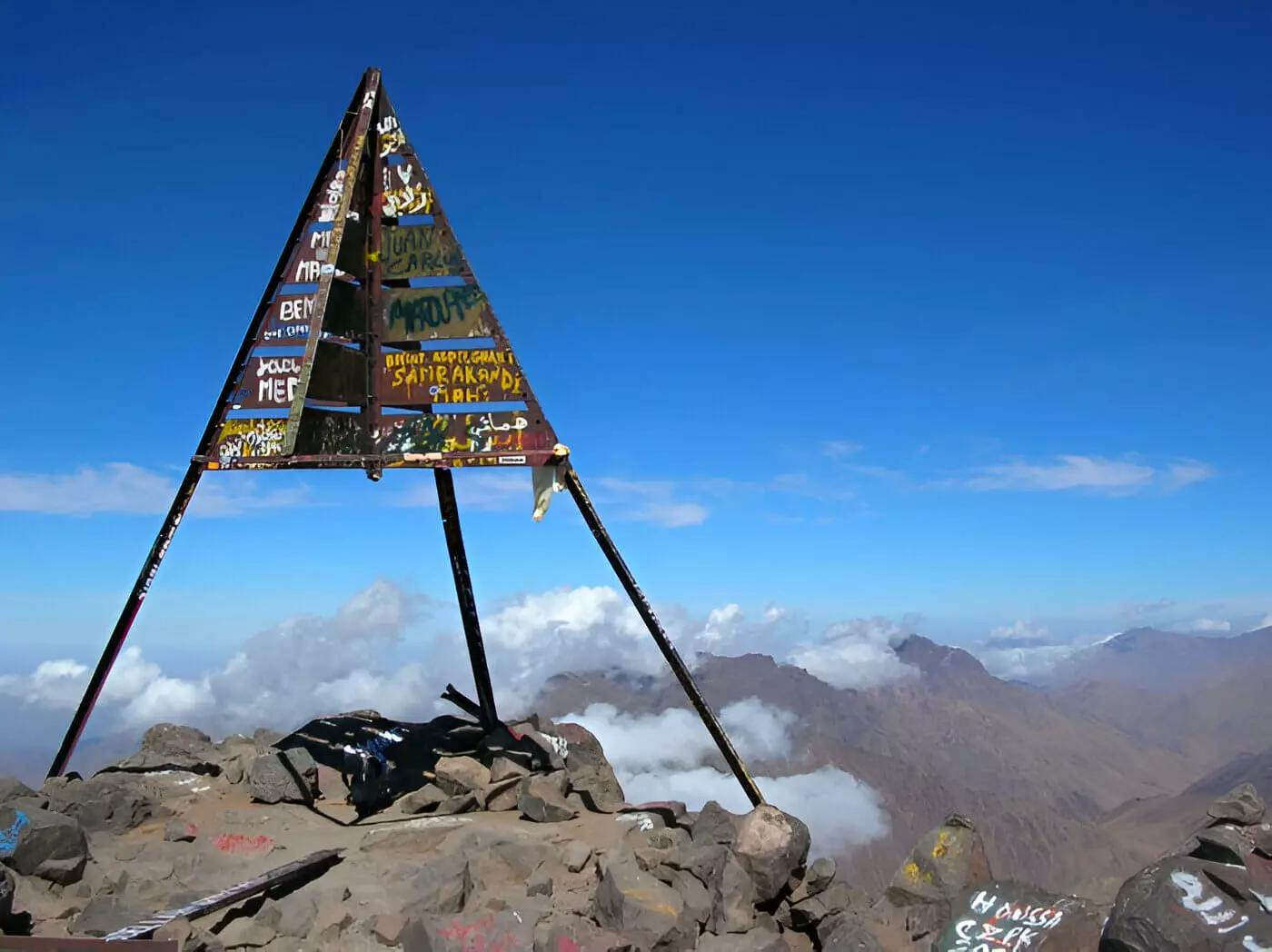
The metal tripod marker at 4,167m gives the classic proof-of-summit shot, with the Atlas range and, on clear mornings, the Sahara haze on one side and Marrakech's plain on the other. Space at the top is tight, so climbers on a mount toubkal guided trek often wait a turn to stand beside the cross.
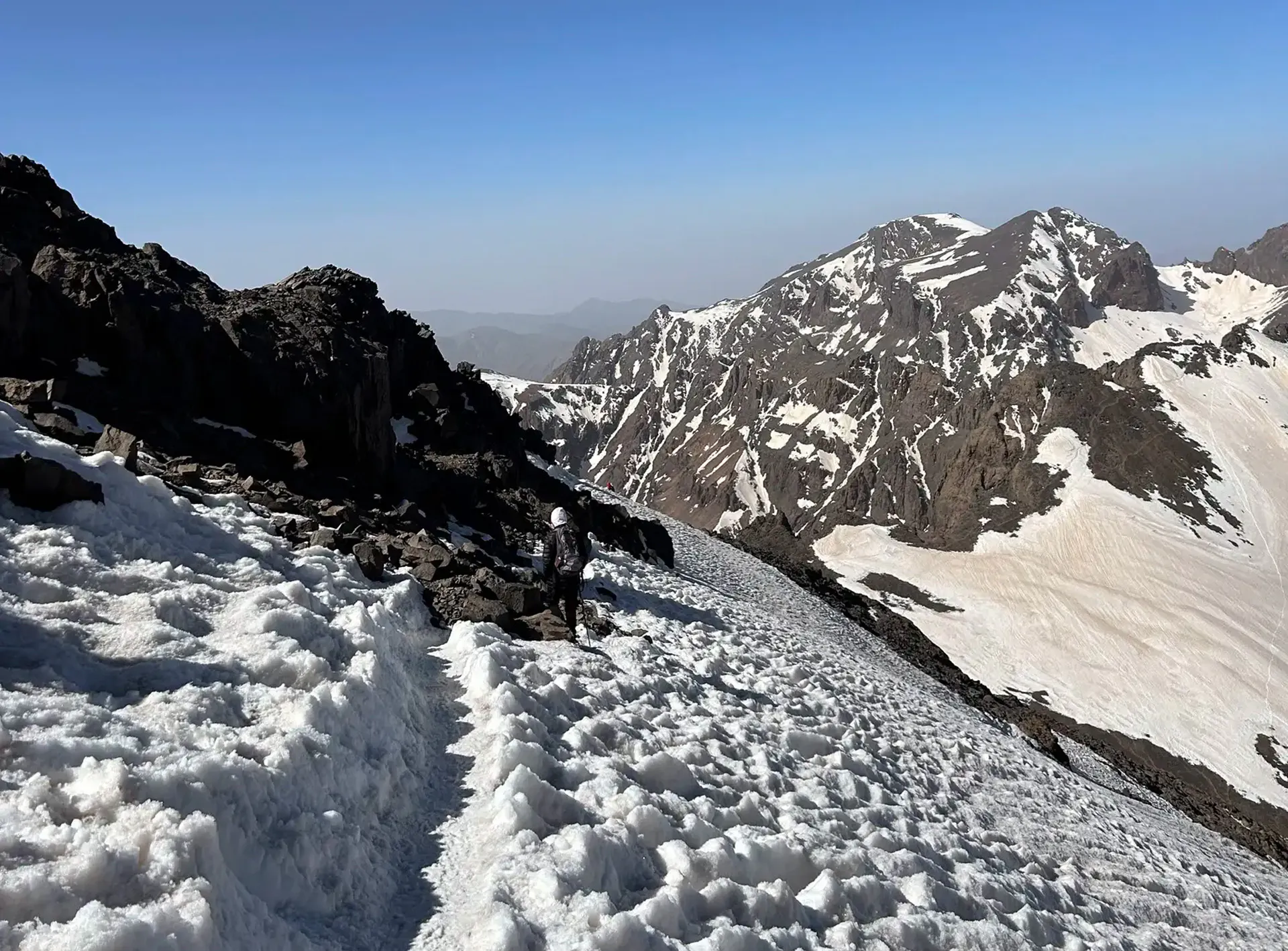
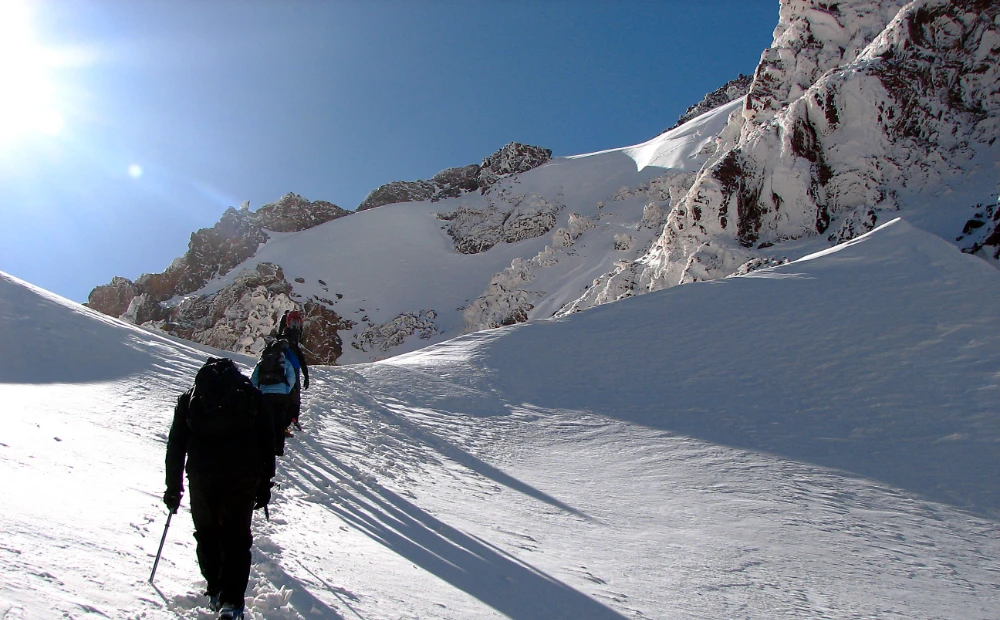
Looking up from the scree slopes below the col, this angle captures the steep North Face couloir slicing through the ridge, a dramatic backdrop favored for wide shots of the final push. Stand on the switchback trail just before the ridge crest for the cleanest sightline.
The stone terrace outside the refuge frames the summit pyramid rising directly behind the building, especially striking at first light when the peak catches sun while the valley stays in shadow. It is also the easiest wide-open spot for group and gear shots before departure.
The zigzagging mule trail above Imlil offers layered shots of trekkers strung along the switchbacks with the green Mizane valley floor and poplar groves far below. Best captured from a higher bend looking back down the path.
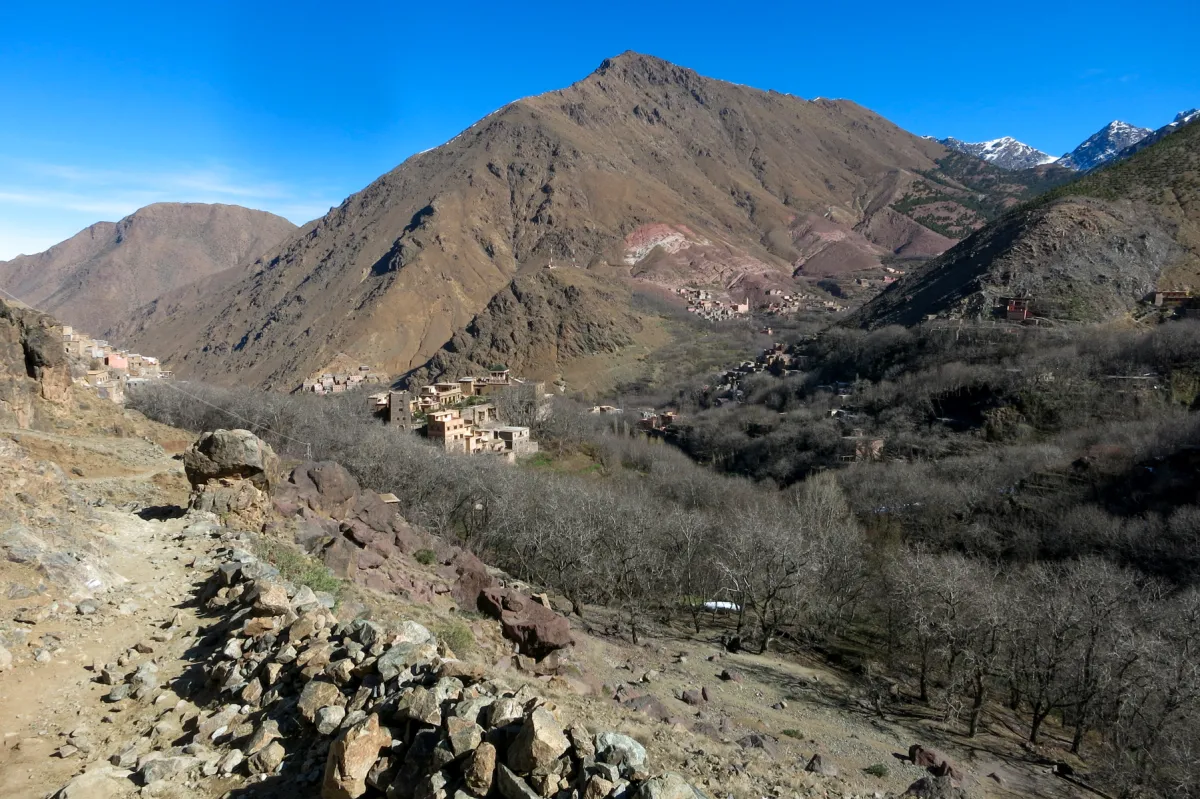
A quieter alternative approach route, this overlook shows terraced fields and scattered Berber villages against the rising Atlas wall, giving a softer, greener counterpoint to the rocky summit views. Reachable via the Tizi n'Tacchdirt path.
The whitewashed boulder shrine beside the river marks the last village stop before the high trail, framed by narrow gorge walls and a footbridge crossing. It is a popular midway photo stop rather than a summit view.
A mount toubkal guided trek is a serious high-altitude undertaking rather than a casual family outing, so honest self-assessment of your children's fitness matters more than their age on paper. Families who do well here are ones with kids who already have multi-hour hiking experience at elevation.
Most licensed guides recommend children be at least 12 to 14 years old and comfortable hiking 5+ hours before attempting the summit route. Younger children can still enjoy shorter valley walks around Imlil without pushing toward the refuge or summit.
Toubkal's summit sits above 4,000m, so altitude headaches and fatigue hit untrained trekkers and kids harder than adults expect. Build in a night at the Toubkal refuge to acclimatize rather than attempting a rushed there-and-back push.
Guides on a mount toubkal guided trek tour will slow the group pace, add extra rest breaks, and sometimes split faster and slower walkers between two guides if the trekking agency allows it. Tell your guide in advance if a child or novice adult is anxious about scree slopes or exposure near the top.
Strollers are not usable anywhere on the mountain trails; the terrain is rocky, steep, and unpaved from Imlil onward. A child carrier backpack works only on the lower valley paths, not on the summit approach.
There are no baby-change facilities or formal toilets beyond basic long-drop options at mountain refuges. Pack diapers, wipes, and hand sanitizer for the whole trek since nothing is available past Imlil village.
Local muleteers in Imlil can carry gear or a tired child partway up the trail, which many guides arrange for family groups. Ask your trekking agency to book a mule in advance rather than trying to find one on arrival day.
Dining options near your mount toubkal guided trek are primarily found within the Imlil village hub or at the mountain-base refuges. While many trekkers rely on guesthouse half-board, local cafes offer traditional tagines and mint tea to fuel your mountain landmarks tour.
Offers basic hot meals and communal dining; cooking on provided stoves is permitted for a fee.
Serves traditional Moroccan cuisine in a cozy dining room with a fireplace and an on-site shop for snacks.
A local spot in Imlil serving tagines, couscous, and mint tea with terrace views, perfect before starting your mount toubkal guided trek tours.
Most guesthouses provide hearty breakfast and dinner packages, making them a convenient choice for those booking a mount toubkal guided trek tour.
Convenient for picking up nuts, fruit, and bottled water before securing your mount toubkal guided trek tickets and heading into the high peaks.
Real experiences from real travelers
Our mount toubkal guided trek exceeded expectations in every way. The guide's knowledge of the terrain and pacing made the ascent manageable even for moderate fitness levels. Summit morning started at 5am with headlamps, reaching the top as sunrise painted the Atlas range gold.
Chose a guided option after researching solo versus supported treks. The mountain guide handled navigation through the scree sections and provided cultural context at each village. Two-day itinerary from Imlil allowed proper acclimatization before the 4,167-meter summit push.
The Toubkal summit trek tour was methodically planned with realistic timing. Guide adjusted pace when altitude affected two group members. Refuge accommodation was basic but adequate, and the mule support meant we carried only daypacks on the steep sections.
Mount Toubkal guided trek tickets included all logistics from Marrakech transfers to refuge stays. The final ascent involves sustained scrambling over loose rock—trekking poles essential. Guide's experience showed in route selection, avoiding crowded periods at the summit tripod.
Completed the climb in late May when snowfields still covered upper slopes. Guide provided crampons and assessed conditions before committing to summit attempt. The Atlas Mountains panorama from 4,167 meters stretched across three countries in clear morning air.
Our guide for the Toubkal ascent grew up in Imlil valley and shared Berber cultural insights throughout. He adjusted our departure time based on weather window and managed group dynamics well when fitness levels varied. The refuge dinner featured tagine prepared by the guardian's family.
The two-day guided trek format allows gradual altitude gain—critical for avoiding mountain sickness. First day ends at 3,200-meter refuge, then predawn start for summit. Guide monitored symptoms and had backup oxygen, though nobody needed it in our group.
Beyond the physical challenge of North Africa's highest summit, the trek passes through terraced Berber villages where guides maintain family connections. Our muleteer sang traditional Amazigh songs during the valley approach. Summit views revealed the Sahara haze to the south.
Booked a mount toubkal guided trek for late August expecting crowds, but our guide's early start strategy meant we summited before the main wave. Descent route varied from ascent, passing different refuge and valley system. Mule transport of heavy gear made the experience far more enjoyable.
The guided ascent provided safety margin for scrambling sections near the summit ridge. Guide carried group first aid and communication equipment. Refuge at Neltner offers shelter from afternoon winds that intensify above 3,500 meters—timing descent before weather turns is essential local knowledge.
Everything you need to know for your journey
Yes, a Toubkal National Park permit is required along with a licensed guide to legally climb Mount Toubkal.
Yes, hiring a licensed guide is mandatory for all trekkers within Toubkal National Park to ensure safety.
Entrance fee is 0 MAD, but a licensed guide and valid permit are required to enter the park.
Bring sturdy hiking boots, warm layers, a headtorch, and a refillable water bottle for your mount toubkal guided trek.
Yes, Mount Toubkal is generally accessible year-round, though winter climbs require specialized equipment and expertise.
It is recommended only for older children with previous trekking experience due to the high-altitude nature of the climb.
Reach the Imlil trailhead via private taxi or shared grand taxi from Marrakech, taking about 1.5 to 2 hours.
Wear layered clothing suitable for cold mountain summits and modest, respectful attire in local Berber villages.
No, the local law mandates a licensed guide for your mount toubkal guided trek regardless of your mountaineering experience.
Explore the largest village in the Mizane valley with traditional architecture.
Visit the famous white-painted shrine situated along the trekking path.
Enjoy walking through the terraced walnut groves and lush mountain landscapes.
Hike this popular pass for expansive views over the surrounding Atlas peaks.
Traditional guest house offering mountain views.
Essential base camp for summit attempts.
Authentic local homestays throughout the village.
Join thousands of happy travelers who have discovered this incredible experience
Book Your Experience Now